Nils from Project Europe started building electrolyzers at just 14.
Sep 26, 2025
3 min read
Author
Intro By Rasmus Holt @ Blackwood
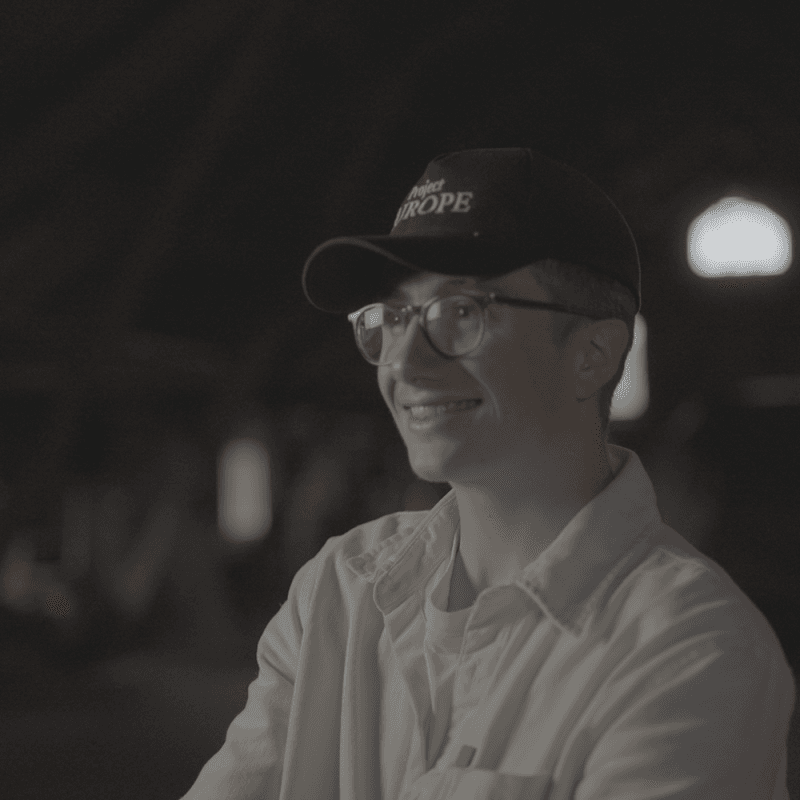
Nils started building electrolyzers at just 14.
By 16, after winning a small scholarship but being turned down by a university lab, he converted his grandparents’ henhouse into a makeshift lab and kept experimenting on his own.
Today, as founder of Lavoit, Nils leads a team of six engineers and scientists with one mission: to make hydrogen production scalable, affordable, and real.
Their platform unites hardware and software in full symbiosis, cutting the Levelized Cost of Hydrogen by up to 40%!
Backed by Project Europe, Anthropic, Google Cloud, NVIDIA’s Inception Program, and leading research institutions like KTH and Karolinska, Lavoit is building “Physical AI” to push electrolysis technology into an entirely new cost curve.
The ambition?
Nothing less than becoming the world’s largest hydrogen producer by 2030.
As always… we asked him a few questions.
Q&A - Nils Samrud - Lavoit
At 16 you built your first electrolyzer with a school grant; what did you learn from that experience that still shapes how you build today?
That you can’t wait for permission. When the university lab said no, I turned my grandparents’ henhouse into a lab and built anyway. That bias for action still drives everything we do at Lavoit.
Why hydrogen? Was there a specific moment when you knew this was the problem worth dedicating your life to?
When I realized the biggest barrier to decarbonization isn’t technology itself, but cost. Hydrogen can replace fossil fuels almost everywhere, but only if it becomes radically cheaper. That’s the problem worth solving.
You describe Lavoit as building “hyper-efficient” systems; what does efficiency mean to you beyond the technical metrics?
Efficiency isn’t just volts and kilowatts. It’s how you use capital, time, and talent. True efficiency is when every part of the system: technical and human, compounds instead of wasting energy.
You’ve set a bold target: world’s largest hydrogen producer by 2030. What has to go right in the next five years for that to become real?
Three things: prove our tech at scale, secure long-term customers, and build the right alliances. Do those right, and scale becomes inevitable.
Many people doubt Europe’s ability to scale industrial champions, what makes you think Europe can produce a global hydrogen leader?
Europe has done it before: Airbus, ABB, Ericsson. We know how to scale complex, capital-heavy industries. Add world-class research talent and strong policy, and Europe can lead in hydrogen too.
How do you balance the hardware–software duality? What’s the hardest part about marrying electrochemistry with digital optimization?
Is not hard in theory is hard when you do it at scale.
What cultural principles guide Lavoit day-to-day, especially given the complexity of the work?
Just do it, the only laws holding you back are the laws of physics. And take care of your health. Building a company is like elite sport: push hard, but recovery is non-negotiable. You can’t run marathons every day without rest.
Where do you see first real commercial traction for Lavoit? Europe, the US, or elsewhere?
Our first pilots are in Sweden, but we’re already seeing strong pull from industrial partners across Europe. That’s where traction will come first.
How do you think about partnerships with incumbents vs. going it alone?
We partner wherever it makes us faster. We don’t need to reinvent separators or compressors. We integrate the best tech available and focus on the intelligence layer that ties it all together.
What’s the single biggest misconception about hydrogen you encounter when talking to investors or policymakers?
That it’s dangerous. People still think “Hindenburg.” In reality, hydrogen is no more dangerous than the propane in your grill, but like any fuel, you handle it with respect.
What keeps you awake at night; the technical risks, the scaling risks, or the geopolitical ones?
Scaling to MW systems at a low cost. That’s the hardest part, but also the lever that changes everything.
If Lavoit succeeds, how different will the energy landscape look in 2035 compared to today?
Hydrogen won’t be a niche anymore. It will be a backbone of industry, as common and cheap as natural gas is today, but without the emissions.