
Sector:
Web3
Country:
USA
Year
2026
Short Description
Boundary is a verifiable stablecoin protocol built for institutional fiduciaries. Its flagship instrument, USBD, replaces the monthly off-chain attestations the rest of the market relies on with continuous on-chain verification of reserves, NAV, collateralisation, and protocol income. A separate staking token, sUSBD, captures earnings from strictly delta-neutral DeFi strategies, keeping cash-like settlement and risk-bearing return cleanly apart. Access runs through a dedicated dApp with institutional KYC/KYB workflows, built for asset managers, hedge funds, and family offices that want to operate on-chain to the same standard of certainty they expect from regulated capital markets.
Founders

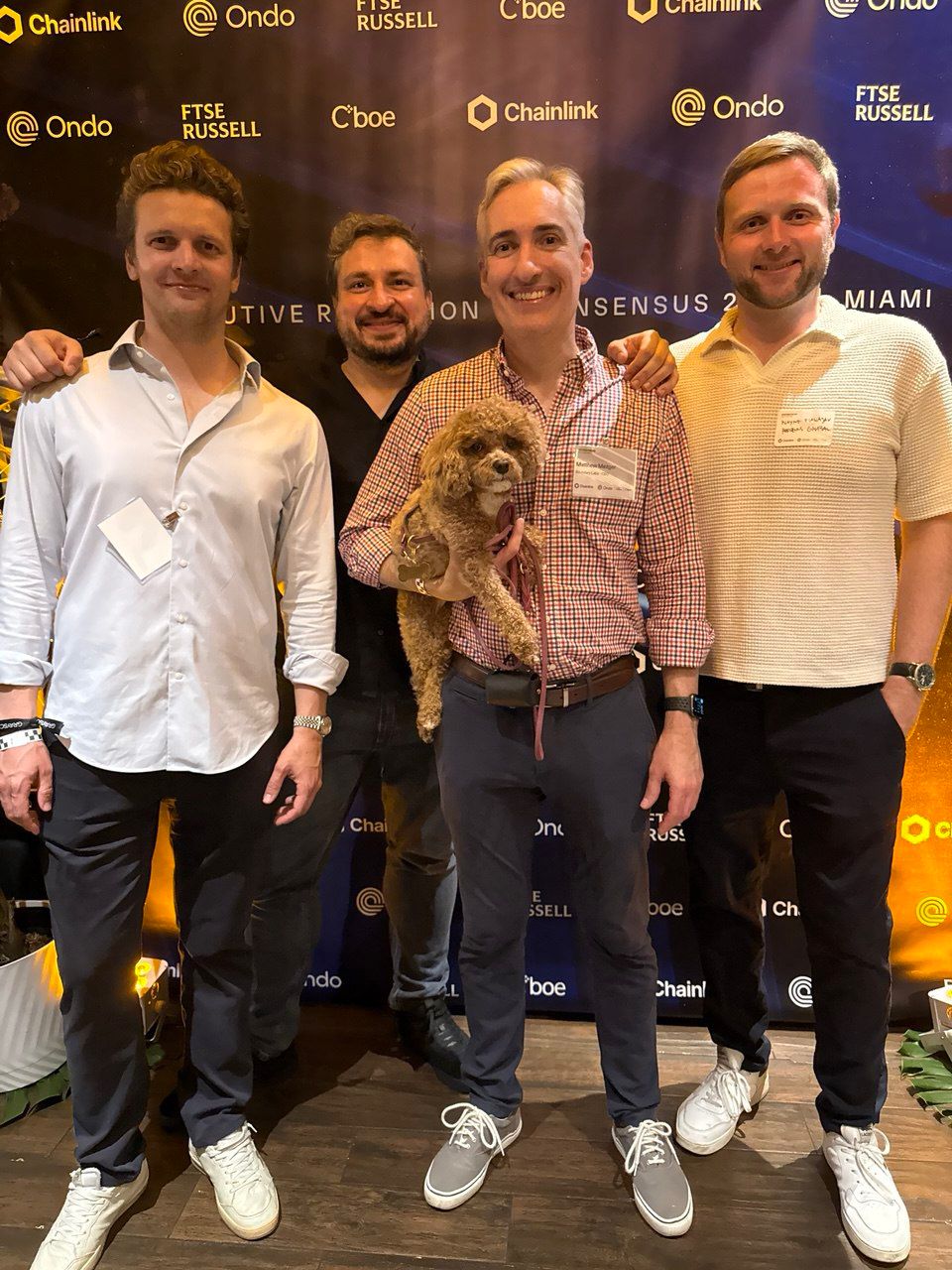
Matthew Mezger
,
Co-founder & CEO

Mathias Nordholm-Carstensen
,
Co-founder & COO
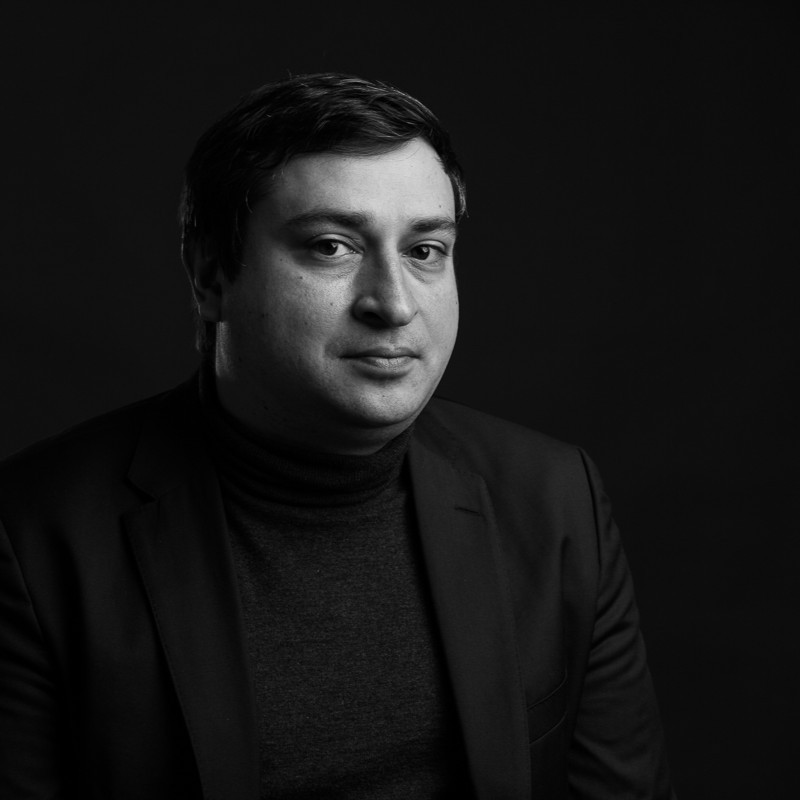
Roman Drapeko
,
Co-founder & CTO
Why we invested
Boundary reflects our view that the institutional stablecoin market is held back by one missing primitive, verifiability. Trillions of fiduciary capital cannot move onto rails that depend on monthly PDFs and trust in opaque off-chain reserves, and the largest incumbents have no incentive to fix it. Boundary treats verifiability as the product rather than a compliance afterthought, with continuous on-chain proof of reserves and NAV, delta-neutral collateral, institutional-only onboarding, and a clean separation between settlement and yield. The founding team combines the exact skills the problem demands, and we want this protocol underneath the next decade of programmable dollars.
Founder Story
Matthew, Roman & Mathias
,
Co-founders
Matthew spent more than twenty years inside the machinery of institutional markets. He started as a credit trader at Deutsche Bank in New York, rose to run NA Rates and eTrading technology, and watched electronic systems quietly reshape how Wall Street prices risk. When digital assets started showing up on serious balance sheets, he crossed over. As Head of Trading at Digital Currency Group, he managed a multi-billion-dollar book and built a trading platform that had to behave like an institutional desk in a market that mostly didn't. He came away convinced that crypto could service serious capital, but only once the rails stopped asking institutions to take its word for it.
Roman spent more than a decade leading engineering inside banks, eventually as a Distinguished AI Engineer at McKinsey's QuantumBlack. He shipped more than a hundred zero-to-one AI products into financial institutions, filed AI patents, and had work downloaded more than a million times. He learned, repeatedly and at scale, what the inside of a global bank actually looks like, what its systems can and can't do, and what it takes to move regulated software into production inside organisations that cannot afford to be wrong.
Mathias arrived at financial services from two directions at once. As a qualified attorney specialising in financial services regulation, he knew the rulebook from the inside. As a Junior Partner in McKinsey's global financial services technology practice, he sat across the table from institutions with more than $40T in combined AUM as they tried to bring capital markets infrastructure on-chain. He spent years watching serious money look at blockchain, want to participate, and walk away, because nothing on offer could be verified to the standard their fiduciary duty required.
Roman and Mathias overlapped inside McKinsey's financial services and AI worlds, working on the institutional blockchain questions that don't have clean answers inside a consulting engagement. Matthew was on the other side of the same problem from the trading floor at DCG, watching billions of dollars of institutional flow ask the same question every week. How do we know what we're actually holding? The diagnosis was the same from every direction. The stablecoin market, already past $300B and on track for trillions, was being built on trust, attestations, and screenshots, and the institutions that were supposed to be its largest users couldn't move at scale onto something they couldn't verify.
They tried to push the change from where they were. The incumbents had too much to protect, the consulting engagements had no edges, and the institutional crypto desks could trade around the problem but not solve it. So they left. Matthew left DCG. Roman left QuantumBlack. Mathias left McKinsey. They founded Boundary on the oldest principle in the industry. Don't trust, verify.
The next era of finance will run on stablecoins, and stablecoins will run on whoever can prove, continuously and on-chain, that every dollar is backed and auditable. Matthew, Roman, and Mathias built Boundary to be that proof, engineered for fiduciaries from the first line of code, with verifiability built into the product itself. A more verifiable foundation is also a more open one, where access to dollar liquidity and on-chain yield is earned by what institutions can prove rather than rationed by who they know.
Matthew spent more than twenty years inside the machinery of institutional markets. He started as a credit trader at Deutsche Bank in New York, rose to run NA Rates and eTrading technology, and watched electronic systems quietly reshape how Wall Street prices risk. When digital assets started showing up on serious balance sheets, he crossed over. As Head of Trading at Digital Currency Group, he managed a multi-billion-dollar book and built a trading platform that had to behave like an institutional desk in a market that mostly didn't. He came away convinced that crypto could service serious capital, but only once the rails stopped asking institutions to take its word for it.
Roman spent more than a decade leading engineering inside banks, eventually as a Distinguished AI Engineer at McKinsey's QuantumBlack. He shipped more than a hundred zero-to-one AI products into financial institutions, filed AI patents, and had work downloaded more than a million times. He learned, repeatedly and at scale, what the inside of a global bank actually looks like, what its systems can and can't do, and what it takes to move regulated software into production inside organisations that cannot afford to be wrong.
Mathias arrived at financial services from two directions at once. As a qualified attorney specialising in financial services regulation, he knew the rulebook from the inside. As a Junior Partner in McKinsey's global financial services technology practice, he sat across the table from institutions with more than $40T in combined AUM as they tried to bring capital markets infrastructure on-chain. He spent years watching serious money look at blockchain, want to participate, and walk away, because nothing on offer could be verified to the standard their fiduciary duty required.
Roman and Mathias overlapped inside McKinsey's financial services and AI worlds, working on the institutional blockchain questions that don't have clean answers inside a consulting engagement. Matthew was on the other side of the same problem from the trading floor at DCG, watching billions of dollars of institutional flow ask the same question every week. How do we know what we're actually holding? The diagnosis was the same from every direction. The stablecoin market, already past $300B and on track for trillions, was being built on trust, attestations, and screenshots, and the institutions that were supposed to be its largest users couldn't move at scale onto something they couldn't verify.
They tried to push the change from where they were. The incumbents had too much to protect, the consulting engagements had no edges, and the institutional crypto desks could trade around the problem but not solve it. So they left. Matthew left DCG. Roman left QuantumBlack. Mathias left McKinsey. They founded Boundary on the oldest principle in the industry. Don't trust, verify.
The next era of finance will run on stablecoins, and stablecoins will run on whoever can prove, continuously and on-chain, that every dollar is backed and auditable. Matthew, Roman, and Mathias built Boundary to be that proof, engineered for fiduciaries from the first line of code, with verifiability built into the product itself. A more verifiable foundation is also a more open one, where access to dollar liquidity and on-chain yield is earned by what institutions can prove rather than rationed by who they know.
Sector:
Web3
Country:
USA
Year
2026
Short Description
Boundary is a verifiable stablecoin protocol built for institutional fiduciaries. Its flagship instrument, USBD, replaces the monthly off-chain attestations the rest of the market relies on with continuous on-chain verification of reserves, NAV, collateralisation, and protocol income. A separate staking token, sUSBD, captures earnings from strictly delta-neutral DeFi strategies, keeping cash-like settlement and risk-bearing return cleanly apart. Access runs through a dedicated dApp with institutional KYC/KYB workflows, built for asset managers, hedge funds, and family offices that want to operate on-chain to the same standard of certainty they expect from regulated capital markets.
Founders
Matthew Mezger
,
Co-founder & CEO
Mathias Nordholm-Carstensen
,
Co-founder & COO
Roman Drapeko
,
Co-founder & CTO
Why we invested
Boundary reflects our view that the institutional stablecoin market is held back by one missing primitive, verifiability. Trillions of fiduciary capital cannot move onto rails that depend on monthly PDFs and trust in opaque off-chain reserves, and the largest incumbents have no incentive to fix it. Boundary treats verifiability as the product rather than a compliance afterthought, with continuous on-chain proof of reserves and NAV, delta-neutral collateral, institutional-only onboarding, and a clean separation between settlement and yield. The founding team combines the exact skills the problem demands, and we want this protocol underneath the next decade of programmable dollars.
Founder Story
Matthew, Roman & Mathias
,
Co-founders
Matthew spent more than twenty years inside the machinery of institutional markets. He started as a credit trader at Deutsche Bank in New York, rose to run NA Rates and eTrading technology, and watched electronic systems quietly reshape how Wall Street prices risk. When digital assets started showing up on serious balance sheets, he crossed over. As Head of Trading at Digital Currency Group, he managed a multi-billion-dollar book and built a trading platform that had to behave like an institutional desk in a market that mostly didn't. He came away convinced that crypto could service serious capital, but only once the rails stopped asking institutions to take its word for it.
Roman spent more than a decade leading engineering inside banks, eventually as a Distinguished AI Engineer at McKinsey's QuantumBlack. He shipped more than a hundred zero-to-one AI products into financial institutions, filed AI patents, and had work downloaded more than a million times. He learned, repeatedly and at scale, what the inside of a global bank actually looks like, what its systems can and can't do, and what it takes to move regulated software into production inside organisations that cannot afford to be wrong.
Mathias arrived at financial services from two directions at once. As a qualified attorney specialising in financial services regulation, he knew the rulebook from the inside. As a Junior Partner in McKinsey's global financial services technology practice, he sat across the table from institutions with more than $40T in combined AUM as they tried to bring capital markets infrastructure on-chain. He spent years watching serious money look at blockchain, want to participate, and walk away, because nothing on offer could be verified to the standard their fiduciary duty required.
Roman and Mathias overlapped inside McKinsey's financial services and AI worlds, working on the institutional blockchain questions that don't have clean answers inside a consulting engagement. Matthew was on the other side of the same problem from the trading floor at DCG, watching billions of dollars of institutional flow ask the same question every week. How do we know what we're actually holding? The diagnosis was the same from every direction. The stablecoin market, already past $300B and on track for trillions, was being built on trust, attestations, and screenshots, and the institutions that were supposed to be its largest users couldn't move at scale onto something they couldn't verify.
They tried to push the change from where they were. The incumbents had too much to protect, the consulting engagements had no edges, and the institutional crypto desks could trade around the problem but not solve it. So they left. Matthew left DCG. Roman left QuantumBlack. Mathias left McKinsey. They founded Boundary on the oldest principle in the industry. Don't trust, verify.
The next era of finance will run on stablecoins, and stablecoins will run on whoever can prove, continuously and on-chain, that every dollar is backed and auditable. Matthew, Roman, and Mathias built Boundary to be that proof, engineered for fiduciaries from the first line of code, with verifiability built into the product itself. A more verifiable foundation is also a more open one, where access to dollar liquidity and on-chain yield is earned by what institutions can prove rather than rationed by who they know.
Matthew spent more than twenty years inside the machinery of institutional markets. He started as a credit trader at Deutsche Bank in New York, rose to run NA Rates and eTrading technology, and watched electronic systems quietly reshape how Wall Street prices risk. When digital assets started showing up on serious balance sheets, he crossed over. As Head of Trading at Digital Currency Group, he managed a multi-billion-dollar book and built a trading platform that had to behave like an institutional desk in a market that mostly didn't. He came away convinced that crypto could service serious capital, but only once the rails stopped asking institutions to take its word for it.
Roman spent more than a decade leading engineering inside banks, eventually as a Distinguished AI Engineer at McKinsey's QuantumBlack. He shipped more than a hundred zero-to-one AI products into financial institutions, filed AI patents, and had work downloaded more than a million times. He learned, repeatedly and at scale, what the inside of a global bank actually looks like, what its systems can and can't do, and what it takes to move regulated software into production inside organisations that cannot afford to be wrong.
Mathias arrived at financial services from two directions at once. As a qualified attorney specialising in financial services regulation, he knew the rulebook from the inside. As a Junior Partner in McKinsey's global financial services technology practice, he sat across the table from institutions with more than $40T in combined AUM as they tried to bring capital markets infrastructure on-chain. He spent years watching serious money look at blockchain, want to participate, and walk away, because nothing on offer could be verified to the standard their fiduciary duty required.
Roman and Mathias overlapped inside McKinsey's financial services and AI worlds, working on the institutional blockchain questions that don't have clean answers inside a consulting engagement. Matthew was on the other side of the same problem from the trading floor at DCG, watching billions of dollars of institutional flow ask the same question every week. How do we know what we're actually holding? The diagnosis was the same from every direction. The stablecoin market, already past $300B and on track for trillions, was being built on trust, attestations, and screenshots, and the institutions that were supposed to be its largest users couldn't move at scale onto something they couldn't verify.
They tried to push the change from where they were. The incumbents had too much to protect, the consulting engagements had no edges, and the institutional crypto desks could trade around the problem but not solve it. So they left. Matthew left DCG. Roman left QuantumBlack. Mathias left McKinsey. They founded Boundary on the oldest principle in the industry. Don't trust, verify.
The next era of finance will run on stablecoins, and stablecoins will run on whoever can prove, continuously and on-chain, that every dollar is backed and auditable. Matthew, Roman, and Mathias built Boundary to be that proof, engineered for fiduciaries from the first line of code, with verifiability built into the product itself. A more verifiable foundation is also a more open one, where access to dollar liquidity and on-chain yield is earned by what institutions can prove rather than rationed by who they know.