

Sector:
Fintech
Country:
United Kingdom
Year
2024
Short Description
Flow Global provides instant e-money liquidity to mobile money agents. $200M+ disbursed and 1M loans processed.
Founders

Nitin Garg
,
Co-founder

Michael Rothe
,
Co-founder

Geoffrey Acini
,
Regional CEO
Why we invested
Flow fits our view that access to working capital should follow real economic activity. By underwriting based on transaction data, Flow provides small merchants with fast, reliable liquidity. This data-driven, infrastructure-light model is well aligned with our fintech DNA.
Founder Story
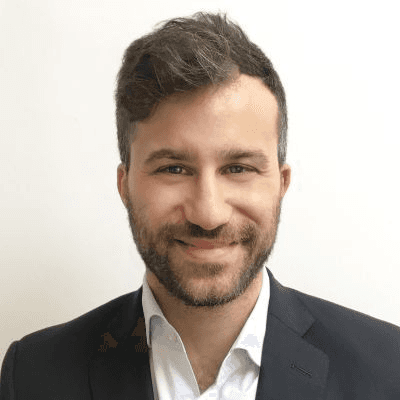
Michael Rothe
,
Co-founder
Growing up in Cologne and studying literature and languages, Michael did not follow a straight line into finance. London broadened his view: parties and classrooms filled with people from Argentina, Brazil, and Nigeria challenged the idea that Europe was the only center of gravity. His time at Citibank’s emerging microfinance unit during the 2008 crisis made this concrete. While mainstream finance unravelled, the microfinance portfolio serving small entrepreneurs remained profitable, showing him that supporting very small businesses in emerging markets could be both commercially sound and socially useful.
Michael went deeper into that world, working with the Ugandan Central Bank on mobile money regulation and later inside a mobile wallet startup, where he saw liquidity constraints quietly choke growth for small shopkeepers.
Consulting across Africa and the Pacific, he met Nitin in Papua New Guinea. Michael brought investment and policy experience; Nitin had run microfinance branches in Mumbai’s slums and launched digital products with banks like Standard Bank and Equity Bank. Together they watched banks hesitate to lend to small merchants, even when the data was there, and concluded that the system would not fix itself.
Flow exists to do that work. Michael and Nitin are building a digital version of microfinance focused on small businesses, starting in markets like Uganda and Rwanda and extending to other emerging economies. By using transaction data instead of collateral, lending from their own balance sheet, and licensing their technology to others, they aim to make flexible working capital a normal part of running a small business in any emerging market.
Growing up in Cologne and studying literature and languages, Michael did not follow a straight line into finance. London broadened his view: parties and classrooms filled with people from Argentina, Brazil, and Nigeria challenged the idea that Europe was the only center of gravity. His time at Citibank’s emerging microfinance unit during the 2008 crisis made this concrete. While mainstream finance unravelled, the microfinance portfolio serving small entrepreneurs remained profitable, showing him that supporting very small businesses in emerging markets could be both commercially sound and socially useful.
Michael went deeper into that world, working with the Ugandan Central Bank on mobile money regulation and later inside a mobile wallet startup, where he saw liquidity constraints quietly choke growth for small shopkeepers.
Consulting across Africa and the Pacific, he met Nitin in Papua New Guinea. Michael brought investment and policy experience; Nitin had run microfinance branches in Mumbai’s slums and launched digital products with banks like Standard Bank and Equity Bank. Together they watched banks hesitate to lend to small merchants, even when the data was there, and concluded that the system would not fix itself.
Flow exists to do that work. Michael and Nitin are building a digital version of microfinance focused on small businesses, starting in markets like Uganda and Rwanda and extending to other emerging economies. By using transaction data instead of collateral, lending from their own balance sheet, and licensing their technology to others, they aim to make flexible working capital a normal part of running a small business in any emerging market.
Sector:
Fintech
Country:
United Kingdom
Year
2024
Short Description
Flow Global provides instant e-money liquidity to mobile money agents. $200M+ disbursed and 1M loans processed.
Founders
Nitin Garg
,
Co-founder
Michael Rothe
,
Co-founder
Geoffrey Acini
,
Regional CEO
Why we invested
Flow fits our view that access to working capital should follow real economic activity. By underwriting based on transaction data, Flow provides small merchants with fast, reliable liquidity. This data-driven, infrastructure-light model is well aligned with our fintech DNA.
Founder Story
Michael Rothe
,
Co-founder
Growing up in Cologne and studying literature and languages, Michael did not follow a straight line into finance. London broadened his view: parties and classrooms filled with people from Argentina, Brazil, and Nigeria challenged the idea that Europe was the only center of gravity. His time at Citibank’s emerging microfinance unit during the 2008 crisis made this concrete. While mainstream finance unravelled, the microfinance portfolio serving small entrepreneurs remained profitable, showing him that supporting very small businesses in emerging markets could be both commercially sound and socially useful.
Michael went deeper into that world, working with the Ugandan Central Bank on mobile money regulation and later inside a mobile wallet startup, where he saw liquidity constraints quietly choke growth for small shopkeepers.
Consulting across Africa and the Pacific, he met Nitin in Papua New Guinea. Michael brought investment and policy experience; Nitin had run microfinance branches in Mumbai’s slums and launched digital products with banks like Standard Bank and Equity Bank. Together they watched banks hesitate to lend to small merchants, even when the data was there, and concluded that the system would not fix itself.
Flow exists to do that work. Michael and Nitin are building a digital version of microfinance focused on small businesses, starting in markets like Uganda and Rwanda and extending to other emerging economies. By using transaction data instead of collateral, lending from their own balance sheet, and licensing their technology to others, they aim to make flexible working capital a normal part of running a small business in any emerging market.
Growing up in Cologne and studying literature and languages, Michael did not follow a straight line into finance. London broadened his view: parties and classrooms filled with people from Argentina, Brazil, and Nigeria challenged the idea that Europe was the only center of gravity. His time at Citibank’s emerging microfinance unit during the 2008 crisis made this concrete. While mainstream finance unravelled, the microfinance portfolio serving small entrepreneurs remained profitable, showing him that supporting very small businesses in emerging markets could be both commercially sound and socially useful.
Michael went deeper into that world, working with the Ugandan Central Bank on mobile money regulation and later inside a mobile wallet startup, where he saw liquidity constraints quietly choke growth for small shopkeepers.
Consulting across Africa and the Pacific, he met Nitin in Papua New Guinea. Michael brought investment and policy experience; Nitin had run microfinance branches in Mumbai’s slums and launched digital products with banks like Standard Bank and Equity Bank. Together they watched banks hesitate to lend to small merchants, even when the data was there, and concluded that the system would not fix itself.
Flow exists to do that work. Michael and Nitin are building a digital version of microfinance focused on small businesses, starting in markets like Uganda and Rwanda and extending to other emerging economies. By using transaction data instead of collateral, lending from their own balance sheet, and licensing their technology to others, they aim to make flexible working capital a normal part of running a small business in any emerging market.