
Sector:
Art-tech
Country:
United Kingdom
Year
2023
Short Description
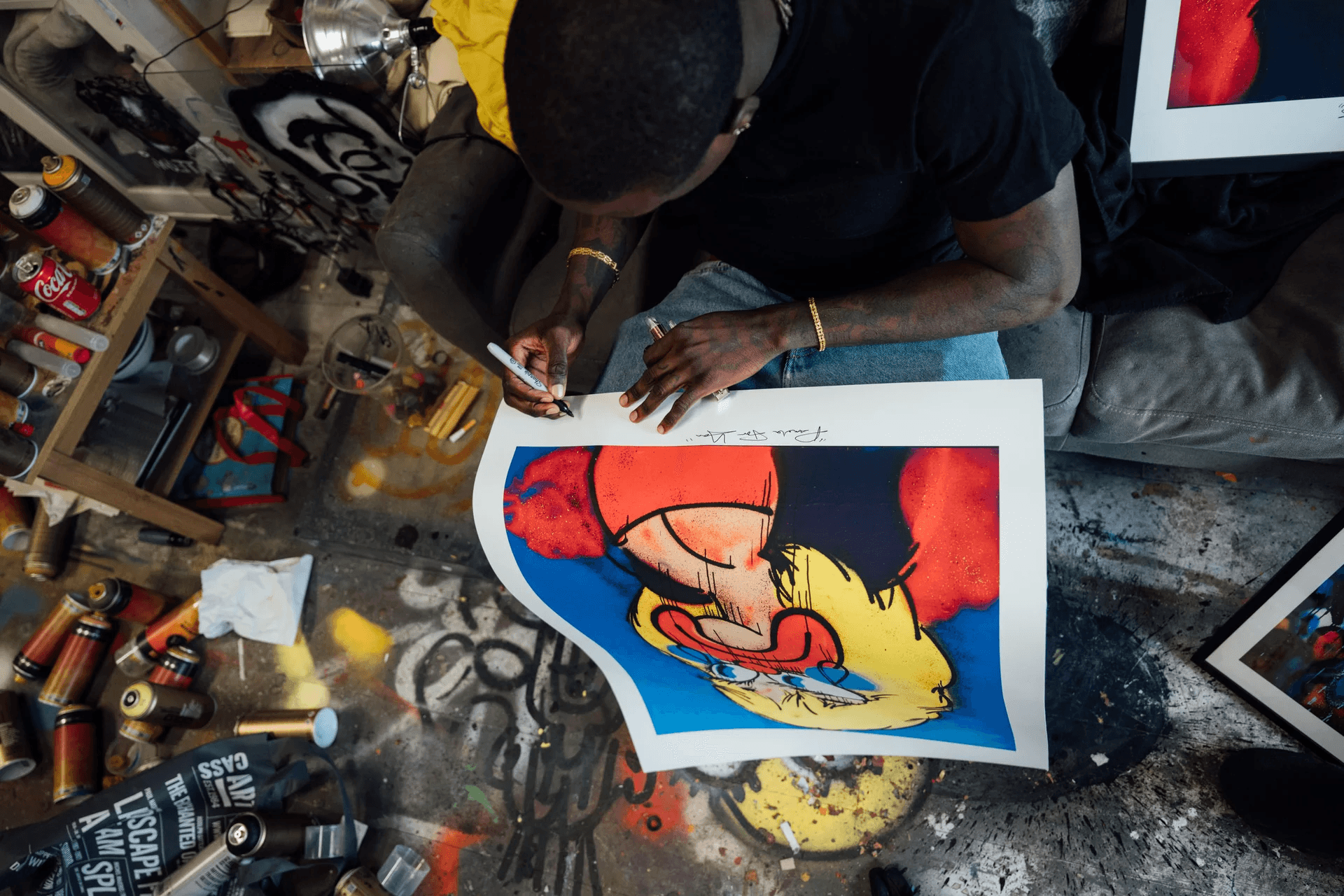
ODITI has evolved into a curated marketplace for authentic, museum-grade art prints from independent artists and culturally relevant collaborators. Prints are released regularly and come with a certificate of authenticity, with optional complimentary framing and worldwide shipping.
Founders

Harry Beard
,
Co-founder & CEO

Alexandre Daillance
,
Co-founder & CMO
Why we invested
ODITI reflects our view that creators are becoming full-fledged entrepreneurs, but should not have to manage supply chains to do so… By handling production and distribution end-to-end, ODITI lets artists monetize physical products without operational drag. Strong partnerships and early traction point to a scalable model for creator-led commerce. Its focus on ownership, leverage and operational excellence fits squarely with our belief and vision of entrepreneurship.
Founder Story

Harry Beard
,
Co-founder & CEO
Harry grew up in Bedford watching his dad run a local estate agency and alongside his grandmother - they were co-founders who had worked multiple jobs to get the business off the ground. From the age of four Harry was in his dad’s office most weekends, trailing house viewings and learning how adults sold things. By fourteen, he started a T‑shirt brand. His mantra was to use his summer holidays making money and not spending it. Local press picked up the story. Soon, established businesses were asking how this teenager had built a following bigger than theirs.
The limits of each hustle forced the next step. T‑shirts needed capital and risky inventory, so he shifted into running social media for 100 local businesses, then consulting for big corporations that didn’t know how to speak to young people online. COVID exposed how hollow consulting felt: if you knew what to do, you should build it yourself.
Running online competitions with celebrity judges revealed how powerful concentrated creative talent and community could be, but also how poorly existing platforms converted that energy into real income for creators.
ODITI is Harry’s answer to that gap. Whilst discourse around design as a skill becoming commoditised is rife, Harry’s belief is that no matter what, the desire for meaningful physical objects is not going anywhere. Instead of asking creatives to sell time or likes, ODITI lets them turn ideas into premium, on‑demand products without touching inventory. From framed artworks today to 3D‑printed goods tomorrow, the company exists to give the world’s best creators a direct way to turn their creativity into sustainable product businesses.
Harry grew up in Bedford watching his dad run a local estate agency and alongside his grandmother - they were co-founders who had worked multiple jobs to get the business off the ground. From the age of four Harry was in his dad’s office most weekends, trailing house viewings and learning how adults sold things. By fourteen, he started a T‑shirt brand. His mantra was to use his summer holidays making money and not spending it. Local press picked up the story. Soon, established businesses were asking how this teenager had built a following bigger than theirs.
The limits of each hustle forced the next step. T‑shirts needed capital and risky inventory, so he shifted into running social media for 100 local businesses, then consulting for big corporations that didn’t know how to speak to young people online. COVID exposed how hollow consulting felt: if you knew what to do, you should build it yourself.
Running online competitions with celebrity judges revealed how powerful concentrated creative talent and community could be, but also how poorly existing platforms converted that energy into real income for creators.
ODITI is Harry’s answer to that gap. Whilst discourse around design as a skill becoming commoditised is rife, Harry’s belief is that no matter what, the desire for meaningful physical objects is not going anywhere. Instead of asking creatives to sell time or likes, ODITI lets them turn ideas into premium, on‑demand products without touching inventory. From framed artworks today to 3D‑printed goods tomorrow, the company exists to give the world’s best creators a direct way to turn their creativity into sustainable product businesses.
Sector:
Art-tech
Country:
United Kingdom
Year
2023
Short Description
ODITI has evolved into a curated marketplace for authentic, museum-grade art prints from independent artists and culturally relevant collaborators. Prints are released regularly and come with a certificate of authenticity, with optional complimentary framing and worldwide shipping.
Founders
Harry Beard
,
Co-founder & CEO
Alexandre Daillance
,
Co-founder & CMO
Why we invested
ODITI reflects our view that creators are becoming full-fledged entrepreneurs, but should not have to manage supply chains to do so… By handling production and distribution end-to-end, ODITI lets artists monetize physical products without operational drag. Strong partnerships and early traction point to a scalable model for creator-led commerce. Its focus on ownership, leverage and operational excellence fits squarely with our belief and vision of entrepreneurship.
Founder Story
Harry Beard
,
Co-founder & CEO
Harry grew up in Bedford watching his dad run a local estate agency and alongside his grandmother - they were co-founders who had worked multiple jobs to get the business off the ground. From the age of four Harry was in his dad’s office most weekends, trailing house viewings and learning how adults sold things. By fourteen, he started a T‑shirt brand. His mantra was to use his summer holidays making money and not spending it. Local press picked up the story. Soon, established businesses were asking how this teenager had built a following bigger than theirs.
The limits of each hustle forced the next step. T‑shirts needed capital and risky inventory, so he shifted into running social media for 100 local businesses, then consulting for big corporations that didn’t know how to speak to young people online. COVID exposed how hollow consulting felt: if you knew what to do, you should build it yourself.
Running online competitions with celebrity judges revealed how powerful concentrated creative talent and community could be, but also how poorly existing platforms converted that energy into real income for creators.
ODITI is Harry’s answer to that gap. Whilst discourse around design as a skill becoming commoditised is rife, Harry’s belief is that no matter what, the desire for meaningful physical objects is not going anywhere. Instead of asking creatives to sell time or likes, ODITI lets them turn ideas into premium, on‑demand products without touching inventory. From framed artworks today to 3D‑printed goods tomorrow, the company exists to give the world’s best creators a direct way to turn their creativity into sustainable product businesses.
Harry grew up in Bedford watching his dad run a local estate agency and alongside his grandmother - they were co-founders who had worked multiple jobs to get the business off the ground. From the age of four Harry was in his dad’s office most weekends, trailing house viewings and learning how adults sold things. By fourteen, he started a T‑shirt brand. His mantra was to use his summer holidays making money and not spending it. Local press picked up the story. Soon, established businesses were asking how this teenager had built a following bigger than theirs.
The limits of each hustle forced the next step. T‑shirts needed capital and risky inventory, so he shifted into running social media for 100 local businesses, then consulting for big corporations that didn’t know how to speak to young people online. COVID exposed how hollow consulting felt: if you knew what to do, you should build it yourself.
Running online competitions with celebrity judges revealed how powerful concentrated creative talent and community could be, but also how poorly existing platforms converted that energy into real income for creators.
ODITI is Harry’s answer to that gap. Whilst discourse around design as a skill becoming commoditised is rife, Harry’s belief is that no matter what, the desire for meaningful physical objects is not going anywhere. Instead of asking creatives to sell time or likes, ODITI lets them turn ideas into premium, on‑demand products without touching inventory. From framed artworks today to 3D‑printed goods tomorrow, the company exists to give the world’s best creators a direct way to turn their creativity into sustainable product businesses.