
Sector:
Cleantech
Country:
Switzerland
Year
2023
Short Description
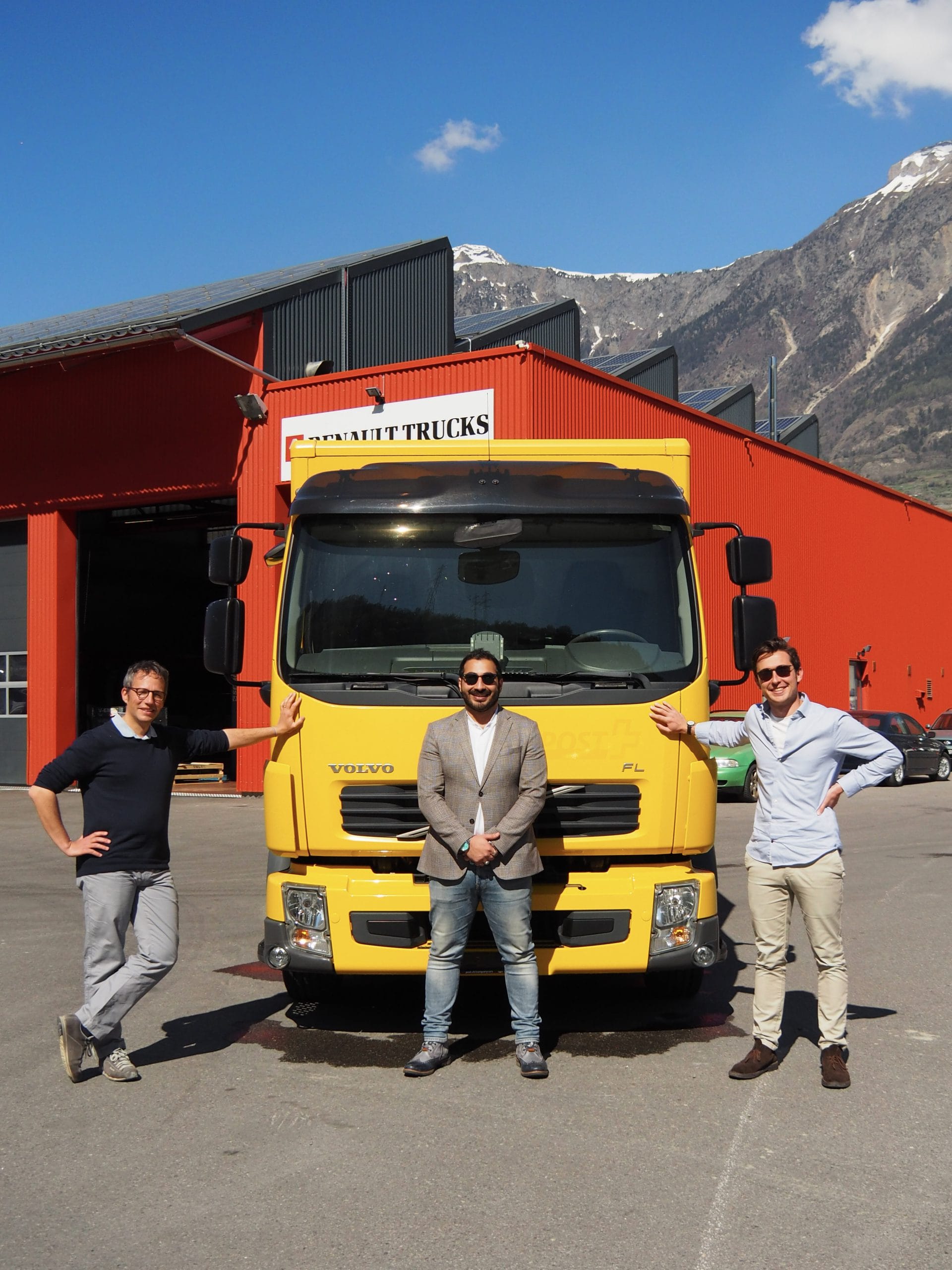
Qaptis develops a Carbon Capture device to help truck transporters drastically decarbonize their fleet (up to 90%). Maritime and Road transportation account for more than 10% of the global annual emissions. Furthermore, these sectors are not on track to achieve Net-Zero by 2050. Qaptis retrofits onto existing vehicles and capture emitted CO2, stores it in liquid form directly onboard and recycle it.
Founders

Masoud Talebi Amiri
,
Co-founder & CEO
Why we invested
Qaptis aligns with our view that climate progress will not come solely from “purity tests”. We do not believe that heavy transport will electrify overnight, and pretending otherwise only slows real impact. By integrating carbon capture into existing systems, Qaptis takes a pragmatic, engineer-led approach to decarbonization, working with today’s reality while helping it move forward. This global relevance, unique IP and European-developed science, made this a natural fit for us.
Founder Story

Masoud Talebi
,
Co-founder & CEO
Masoud grew up watching his father build businesses, with an office that blended into family life. That made “having his own thing” feel normal, not exceptional. At EPFL, he trained as a chemical engineer and where he deepened his modeling and experimental work. Around him, the university’s startup culture and his siblings’ paths made entrepreneurship feel like the natural way to turn ideas into impact.
His PhD work had become Bloom Biorenewables, and he had co‑founded Ponera Group by 2018. He saw how hard it was for industry to move beyond incremental improvements, and how often technology and market timing were misaligned.
When EPFL professor François Maréchal and advisor Shivom Sharma approached him with early CO₂ capture technology in 2020, he recognized both the potential and the risk: the science was demanding, the market early, and the path uncertain.
Qaptis exists because Masoud believes heavy emitters shouldn’t have to build world‑class CO₂ capture capabilities from scratch. The company develops the core components and know‑how so others can integrate CO₂ capture into their own systems. Today, Qaptis is focused on becoming the reference technology partner for point‑source CO₂ capture.
Masoud grew up watching his father build businesses, with an office that blended into family life. That made “having his own thing” feel normal, not exceptional. At EPFL, he trained as a chemical engineer and where he deepened his modeling and experimental work. Around him, the university’s startup culture and his siblings’ paths made entrepreneurship feel like the natural way to turn ideas into impact.
His PhD work had become Bloom Biorenewables, and he had co‑founded Ponera Group by 2018. He saw how hard it was for industry to move beyond incremental improvements, and how often technology and market timing were misaligned.
When EPFL professor François Maréchal and advisor Shivom Sharma approached him with early CO₂ capture technology in 2020, he recognized both the potential and the risk: the science was demanding, the market early, and the path uncertain.
Qaptis exists because Masoud believes heavy emitters shouldn’t have to build world‑class CO₂ capture capabilities from scratch. The company develops the core components and know‑how so others can integrate CO₂ capture into their own systems. Today, Qaptis is focused on becoming the reference technology partner for point‑source CO₂ capture.
Sector:
Cleantech
Country:
Switzerland
Year
2023
Short Description
Qaptis develops a Carbon Capture device to help truck transporters drastically decarbonize their fleet (up to 90%). Maritime and Road transportation account for more than 10% of the global annual emissions. Furthermore, these sectors are not on track to achieve Net-Zero by 2050. Qaptis retrofits onto existing vehicles and capture emitted CO2, stores it in liquid form directly onboard and recycle it.
Founders
Masoud Talebi Amiri
,
Co-founder & CEO
Why we invested
Qaptis aligns with our view that climate progress will not come solely from “purity tests”. We do not believe that heavy transport will electrify overnight, and pretending otherwise only slows real impact. By integrating carbon capture into existing systems, Qaptis takes a pragmatic, engineer-led approach to decarbonization, working with today’s reality while helping it move forward. This global relevance, unique IP and European-developed science, made this a natural fit for us.
Founder Story
Masoud Talebi
,
Co-founder & CEO
Masoud grew up watching his father build businesses, with an office that blended into family life. That made “having his own thing” feel normal, not exceptional. At EPFL, he trained as a chemical engineer and where he deepened his modeling and experimental work. Around him, the university’s startup culture and his siblings’ paths made entrepreneurship feel like the natural way to turn ideas into impact.
His PhD work had become Bloom Biorenewables, and he had co‑founded Ponera Group by 2018. He saw how hard it was for industry to move beyond incremental improvements, and how often technology and market timing were misaligned.
When EPFL professor François Maréchal and advisor Shivom Sharma approached him with early CO₂ capture technology in 2020, he recognized both the potential and the risk: the science was demanding, the market early, and the path uncertain.
Qaptis exists because Masoud believes heavy emitters shouldn’t have to build world‑class CO₂ capture capabilities from scratch. The company develops the core components and know‑how so others can integrate CO₂ capture into their own systems. Today, Qaptis is focused on becoming the reference technology partner for point‑source CO₂ capture.
Masoud grew up watching his father build businesses, with an office that blended into family life. That made “having his own thing” feel normal, not exceptional. At EPFL, he trained as a chemical engineer and where he deepened his modeling and experimental work. Around him, the university’s startup culture and his siblings’ paths made entrepreneurship feel like the natural way to turn ideas into impact.
His PhD work had become Bloom Biorenewables, and he had co‑founded Ponera Group by 2018. He saw how hard it was for industry to move beyond incremental improvements, and how often technology and market timing were misaligned.
When EPFL professor François Maréchal and advisor Shivom Sharma approached him with early CO₂ capture technology in 2020, he recognized both the potential and the risk: the science was demanding, the market early, and the path uncertain.
Qaptis exists because Masoud believes heavy emitters shouldn’t have to build world‑class CO₂ capture capabilities from scratch. The company develops the core components and know‑how so others can integrate CO₂ capture into their own systems. Today, Qaptis is focused on becoming the reference technology partner for point‑source CO₂ capture.