HackEurope: Agency, aura farming and the great divide
Feb 26, 2026
4 min read.
Author
Jonas Madsen, Head of IR @ BlackWood
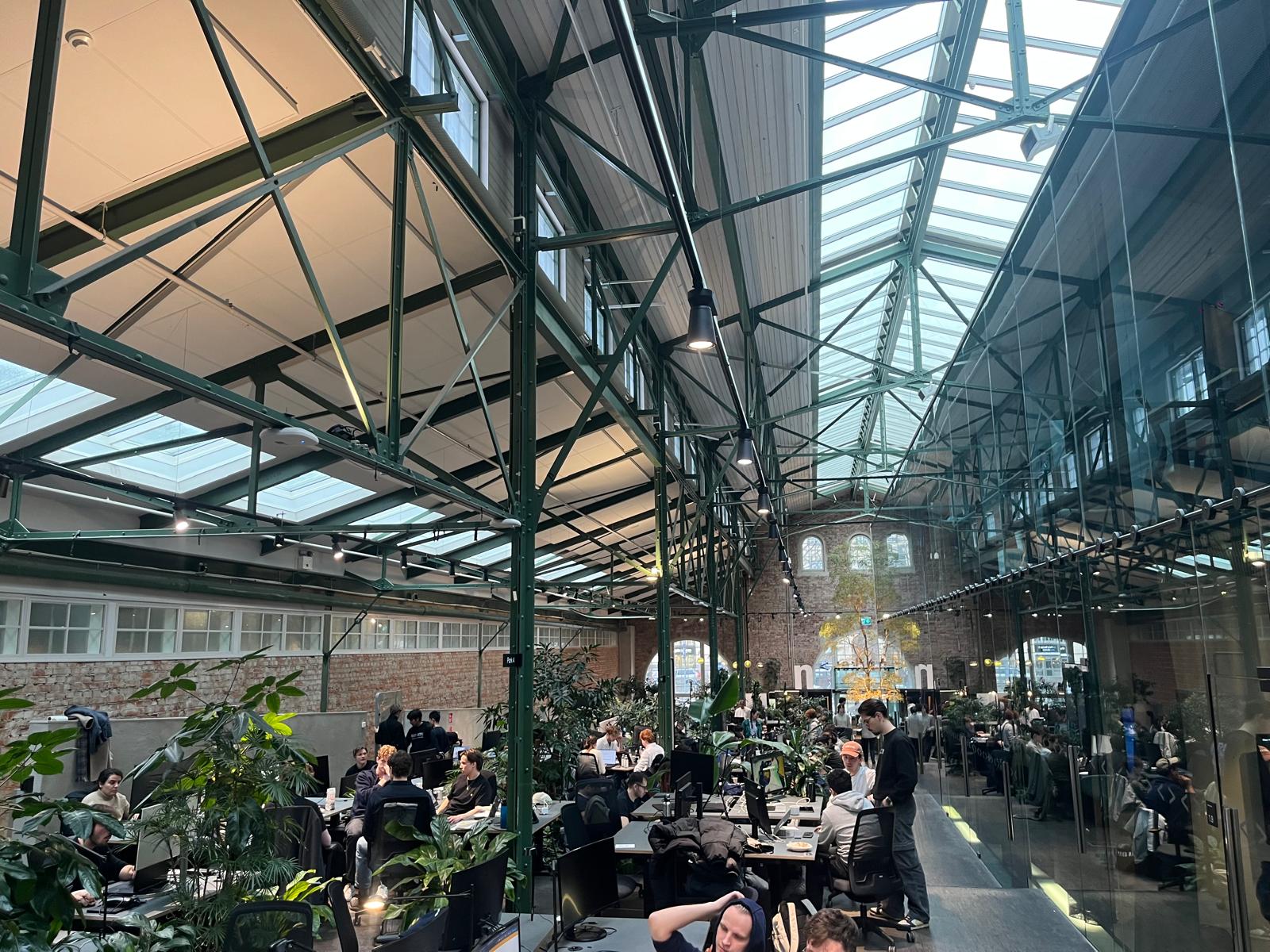
I was in Stockholm over the weekend as HackEurope took over Norrsken House, part of what was happening simultaneously across European hubs for what is billed as the EU’s largest hackathon.
1000 participants, 24 hours to build.
Within that time frame, one team built an agent-orchestrated wildfire prevention system (predicting strike zones, dispatching drones, dropping cloud-seeding payloads), while others shipped autonomous agent managers, danger detection systems, payment agents on OpenClaw, and cryptographic ID detection and recognition.
This is the first time I’ve seen how quickly incredible products can now be built up close (not just reading about it). It dragged me back to a corner of the internet I thought I’d left in 2023: The belief that building faster, iterating faster, deploying faster is not just inevitable, but desirable, because the upside compounds faster than the downside catches up. This idea sits in the same techno-optimist tradition often associated with the patron saint of the blue hyperlink. We’re simply renegades with our orange ones ;)
It was around the same time you saw the e/acc in the kings of Silicon Valleys bios. Effective accelerationism (e/acc) was the ideological movement about unrestricted technological progress being a solution to universal human problems - climate change, war and poverty. The notion that “everything is solved by AI”.
(I’m pro eu/acc btw 🇪🇺)
Seeing up close how fast the technological advancements have improved was insane. And now I’m certain. Speed is no longer the moat.
Agency and aura farming
Non-technical people are shipping thousands of lines of code without reading them, as you don’t have to anymore. Agents catch your bugs, prompt back in Claude Code and fix it in a new loop.
Speed used to be the advantage, but now everyone is fast - or at least fast enough that it stops being interesting. So execution in the traditional sense starts to flatten. The gap between having an idea and having something live is collapsing, and it is collapsing for a lot of people at the same time.
Agency is now the thing that moves the needle. For a long time, agency was basically execution. The person who actually got things done. That was already rare.
But now it just feels different.
There is still execution, but there is something on top of it - and at a Hackathon it is very clear it is happening.
In Sthlm, there were a few people whom everyone talked about. And boy I tell you, these people knew that. They lean into it, double down and max out on everything that signals that. Brainrot-chronically-online-gen-alpha-types have decided to call it aura farming.
It sounds stupid to borrow a TikTok term, but it works. You manufacture the feeling that something is already happening and people should probably pay attention.
Roy Lee did this perfectly with Cluely. He didn’t win on product, but won on narrative and virality, making SF wet with a story. That’s aura farming. It still works, but the aura fades when the product doesn’t catch up. Sam Kriss’ “Child’s Play” is basically a post-mortem of that. Highly suggest reading.
So if everyone can build now, it’s a matter of who actually moves - and who can get other people moving with them.
This is also why my colleague’s piece, “who really benefits when venture moves in” is worth reading. Founder houses, shared desks, hackathons - it’s all the same upstream game of minimising selection risk. Investors want differentiated access to exceptional people, and these places are basically agency detectors. And for newborn founders (now bordering on infantile), they’re also the perfect arena to aura farm.
The great divide
With speed no longer being the moat, local agents soon in everyone’s machines, and AI democratising who gets the opportunity to build great products, we will see a greater divide than ever before between those with agency and those without.
Most people are not built to act without constraints. They are used to structure, direction, deadlines, approvals, processes that make it clear what to do next. Even in startups, there is usually a frame that holds everything together.
Take that away, and a lot of people stall.
There are people who use AI to compound, and there are people stuck in prompt & pray.
There are people who move, and there are people who wait.
And the gap between them does not stay small. If you move, you get feedback, you learn, you improve, and you move again. If you wait, you are not just standing still, you are falling behind. The rule of compounding holds - both ways.
At some point, hesitation is not neutral anymore and it will cost you.
We are used to thinking the advantage comes from knowing more or building better.
The difference is increasingly just whether you decide to move.
The divide between those who do something and those who hesitate will grow bigger than ever before.