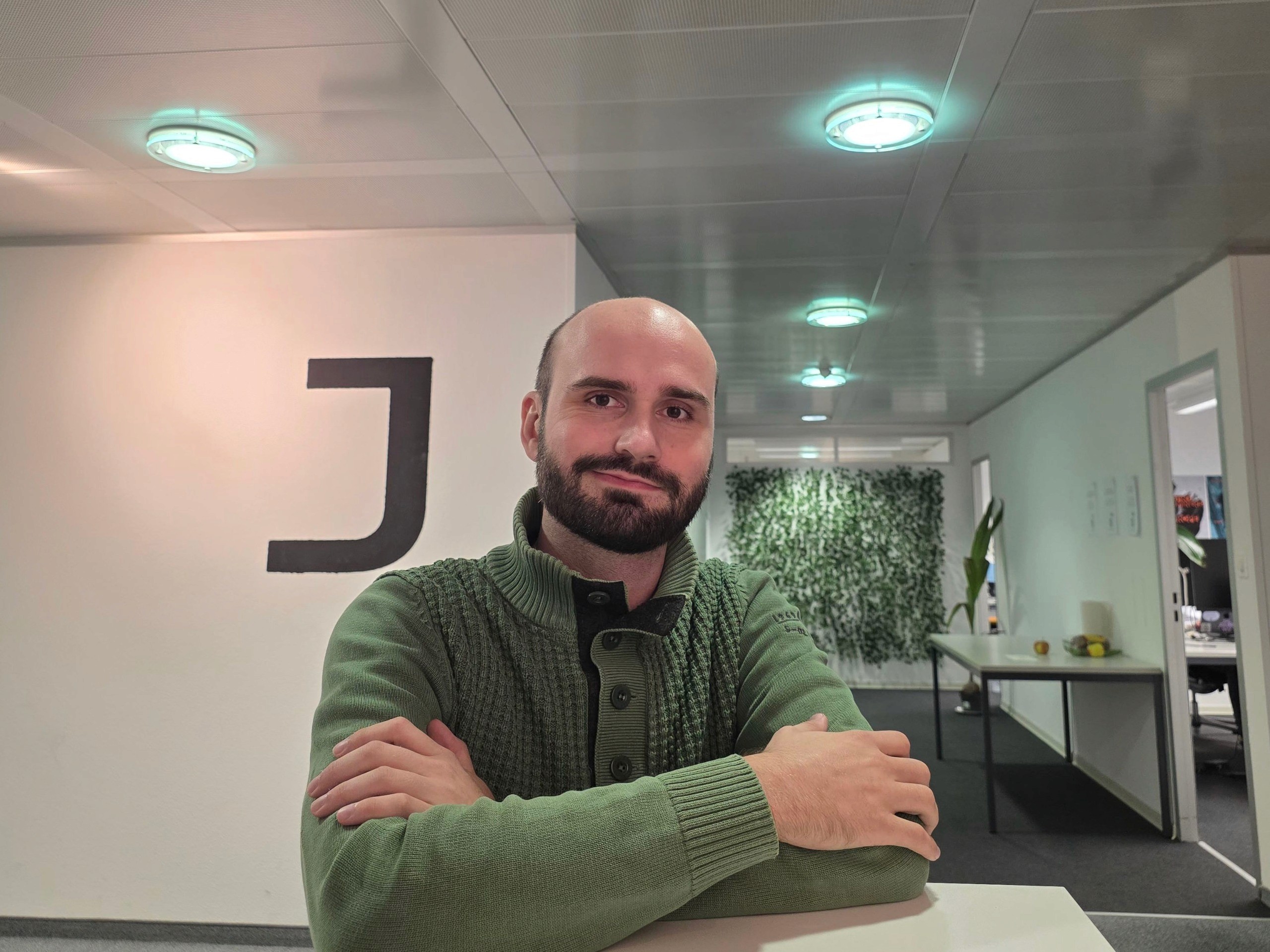
Benjamin Preisler on rebuilding Private Equity diligence around AI
Jun 25, 2026
4 min read
Author
Lucas Ohrt

Benjamin Preisler is a Chief of Staff at Riplo, an AI-native firm changing how private equity underwrites value, across diligence, portfolio value creation, and exit preparation.
Riplo starts from a clear premise: private equity firms need to understand how AI changes the companies they invest in, but the traditional advisory model was never built for the speed, breadth, and technical depth that question now demands. The firm works across the deal lifecycle, from commercial diligence and AI overlays to value creation and exit prep, delivering first views in three to five days, with proprietary software behind the work.
What makes Benjamin's perspective unusual is where he sits: between advisory, investing, and company-building, at an age when most of his peers have done only one. Before Riplo, he was a Tech-Capital Consultant at BCG and read Law and Finance at Oxford after dual degrees in Law and Business at IE. He has seen the traditional side of advisory, the operating side of early ventures, and now the attempt to rebuild parts of the PE workflow from the inside.
Private equity is entering a phase where AI is no longer just a technology theme in diligence. It is becoming a question that touches every asset: how defensible is the company, what operational work can be automated, where are the capability gaps, what does the AI roadmap look like, and how credible is the story for future buyers? Those questions are hard to answer quickly, but waiting weeks is not how deals move.
Riplo’s bet is that AI-native advisory can give funds a faster and more structured way to answer them. Not by replacing judgment, but by changing the architecture behind the work: data ingestion, research, benchmarking, analysis, audit trails, and output all built around software from the start.
We sat down to talk about why private equity needs a different way to understand AI, what diligence looks like when every asset has an AI question attached to it, how software changes the advisory model, and where human judgment still matters when the work gets faster.

Q&A
Riplo describes itself as an AI-native advisory firm for private equity. What does that mean in practice?
It starts with the position funds are suddenly in. In 2026 they now need to understand and apply AI across everything now, not just inside their own operations but across the assets they are underwriting and the portfolio companies they already own. That is a lot to ask of any one team, because it sits at the intersection of three things that rarely live together: a real understanding of private equity, a real understanding of AI, and enough grasp of the industries they invest in to know what the technology actually changes. That is the gap we are built for.
You see it most clearly in diligence today. The commercial diligence firms are good at markets and business models, and the technical advisers are good at architecture and code, but the AI question sits between the two of them. It is partly what the technology actually does and partly what that means for the commercial outlook. And neither side is set up to answer both halves at once, so a fund is left with two reports that do not speak to each other and has to bridge the gap itself. You might call what we do technical alpha, a read on the technology the rest of the market cannot yet price, and an assessment of whether the AI underneath an asset can really sustain the margin expansion an investment committee is underwriting. The advisory is how our relationships begin. The real product (what makes AI-native service players a venture case) is the software engine. Once a fund has run enough deals through it, it stops treating us as a vendor it calls occasionally and starts treating us as the layer through which it evaluates AI across the deal lifecycle.
You came from BCG before joining Riplo as a founding operator. What felt broken or too slow in the traditional advisory model?
It comes down to the incentive structure. Legacy consultancies run on utilisation, which means staffing volume, hours billed, and the hundred-page deck that justifies the fee. So four weeks of work end up distilled into three bullets that actually matter, and the deck itself was never really the answer. It was only ever proof that the work had been done, while the one question the investment committee is betting on gets half an answer at best.
Tobias, our CEO, and I heard this from the other side at SuperReturn a few weeks ago. Fund after fund described deals where AI was the deciding variable, and what struck me wasn't that people couldn't see it. It was the genuine uncertainty in the room. Private equity isn't used to that, because the discipline is built to underwrite the past, the track record and the audited numbers and what already happened. But you aren't buying the past. You're buying a bet on the future, and the thing bending that future now is AI, which is precisely what the old model was never built to answer.
Riplo delivers first views in 3-5 days. How do you make diligence faster without making it shallow?
I would argue that in 2026, speed and depth aren't in tension. The problem with traditional diligence isn't that people aren't working hard. It's that a team can only look at a few things properly. So they pick five, and hope they picked the right five.
The software looks at five hundred and tells you where to dig in. That's the part people miss. The machine does the curation; it narrows five hundred down to the dozen that matter. Then our advisors and AI experts go and understand those properly. So you end up going broader and deeper at the same time, allowing the GP to make their decision with a full view of "here's the risk, here's what it means." And a perk of being AI native is we can get it to you in days not weeks.
A lot of companies now have an AI narrative. How do you separate real capability from a story built for investors?
The first thing we look at is track record. AI has been a real priority for three years now, so there's history to test the story against. We want to know what's there and was there before the deal. Think talent hired, features shipped, thought leadership that went out long before the bankers showed up, not last-minute announcements timed to the sale. And in most cases, you can hear it in how a team talks. People who've lived with this technology describe it differently from those who picked up the vocabulary for the roadshow.
Then we look at the architecture rather than the pitch deck. The question beneath every AI claim is the same: is this a moat or a risk? So we go to the code, to the data and to where the R&D money is actually going. If a company calls itself an AI leader while most of its engineers are keeping legacy systems alive, the story is built on sand. A great deal of what passes for AI diligence today is theatre, a roadmap slide rather than a genuine moat. Our job is to tell a GP whether AI is core to how the company makes money or merely a wrapper bolted on to impress the exit.
Where do you think AI matters most in PE today: buy-side diligence, portfolio value creation, exit preparation, or cross-portfolio strategy?
The honest answer is that it isn't one place anymore, and that is what makes it hard for funds. It is non-optional at entry, where you cannot underwrite a deal today without a real view on it. It is non-optional in the story you sell, particularly for B2B SaaS, where a buyer now expects an AI narrative that holds up. And it is non-optional in value creation, because the thesis has to actually pay off during the hold. All three are true at once, and doing them all well is a massive lift.
Value creation is where I part company with much of the market. Everyone is racing to bolt a model onto a portfolio company and call it an AI play, which is the easy one per cent of the work. The real work is rebuilding pricing, sales incentives and customer success around the technology, so that it keeps functioning once the advisers have left the room. And private markets are the best vehicle for it. A public company struggles to absorb the volatility of tearing up its own P&L to rebuild around AI, because it is judged on a quarterly snapshot. A private equity owner can drive those changes through and accept weaker short-term performance in a way public markets will not. The governance model is the real advantage, and we build the engine for that transformation. That is the difference between picking winners and engineering them.
If we sit down again in a year, what do you think will look most different about how PE funds evaluate AI risk and opportunity?
The AI workstream disappears. Today it is a separate stream, a separate team and a separate slide. Within a year it will be baked into the work that was always there, so that it is no longer AI diligence but simply commercial and technical diligence with the AI read built in. A fund that skips that step will look as careless as one that failed to model the debt.
The same will be true inside the portfolio, where there will be no standalone AI team off to the side. Instead it will be the pricing team that uses AI and the sales organisation that runs on it. A technical read on the asset becomes something LPs expect as a matter of course. To put it bluntly, if you cannot verify the code, you have no business underwriting the deal.