Harshita and Kavish on Rebuilding the Accounting Firm Before Leaving University
May 29, 2026
4 min read
Author
Lucas Ohrt
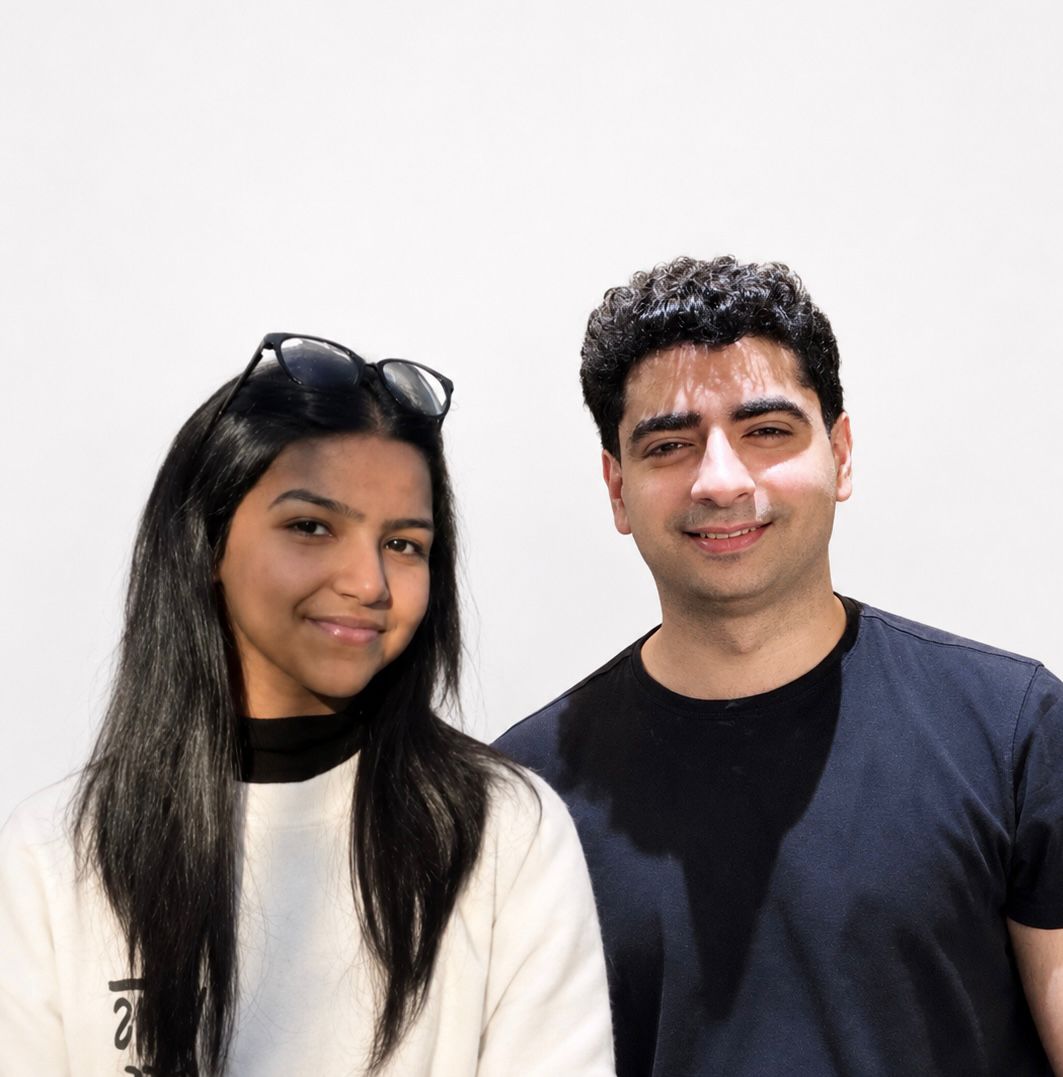
We first came across Harshita and Kavish in early April, and they stood out immediately for building in a category most student founders would never go near.
Both are studying computer science at the University of Manchester. Kavish interned at AWS and UKRI, where he worked on scientific computing infrastructure. Harshita runs the Manchester AI Club and has shipped products across multiple internships while still at university. Two technical students, close to university AI communities and campus-speed iteration, taking on a slow, trust-heavy professional services market where month-end close still takes weeks and expensive human review is applied far too late.
Their starting point came from firsthand experience. Kavish did taxes for his family's export business in India, matching records in Excel until he wrote a Python script to do it. That script became their v0. Then they spent a month inside an accounting firm in Mumbai doing the work by hand, filing returns, matching records line by line. Same loop every time. They came out of it not wanting to sell software to accountants, but to do the work for them.
Matcha is an AI-native accounting firm. AI handles the matching, cleaning, and reconciliation. A CPA reviews and signs off. No junior in the loop for the part that shouldn't need one.
We sat down to talk about why they built a firm instead of a tool, where AI is already good enough to own the work, and what disappears from the traditional accounting model if this actually works.

Q&A
Q1: You are both still students at the University of Manchester, but you are building in one of the least student-like categories: accounting. What made you want to take on such a traditional, trust-heavy market?
We saw the same broken thing twice.
First at home. Kavish did the taxes for his family's export business in India. Matching the records in Excel was so painful he wrote a small Python script to do it. That script became our v0.
Then we went deeper. We spent a month inside an accounting firm in Mumbai, doing the work by hand: monthly returns, year-end close, all of it. Same loop every time. Pull data from the government portal, export from the accounting software, match it line by line, fix what's off. If the junior is slow, the filing is late. If they quit, the firm trains someone new.
So we didn't pick accounting because it's exciting. We picked it because we'd seen the same mess from two sides, and it was clearly fixable.
It's also a good market for the reason it looks boring. It barely changes, and firms don't switch once they trust you.
Q2: Matcha describes itself as an AI-native accounting firm, not just software for accountants. Why did you decide to build the firm itself rather than sell tools to existing firms?
Traditional firms run on juniors. A junior pulls the data and matches it before every filing. But a junior calls in sick. Takes longer than planned. Makes mistakes you only catch at the end. The firm carries that risk every cycle.
A tool doesn't fix this. The junior still has to run the tool. You've just made them a bit faster. The dependency stays.
We don't sell a tool. We do the work and hand back the finished output, ready to file. No junior in the loop for that step. We take out the headcount and the risk that comes with it.
And it holds up. A tool is easy to copy. Doing the work well is not. Firms get whatever the client sends: bank PDFs, Tally exports, WhatsApp screenshots. We sit inside firms and built the engine for that mess. Every firm we run makes it sharper. The work scales without adding people. Juniors don't.
Q3: You have both spent time around AI, cloud infrastructure, product, and student tech communities. How has that shaped the way you think about what an accounting firm should look like?
Kavish built a platform at AWS where AI agents each did a role: one designs, one writes, one tests, a human checks. A firm is the same shape. Juniors pull data, match it, flag what's off, a senior signs it. We'd built that pattern once. We just pointed it at accounting.
Harshita comes from product. Her job was turning messy data into something clean enough to use. That's the real work in a firm. Clients send bank PDFs, Tally dumps, WhatsApp screenshots. Most tools assume the data is already clean. We don't.
So we don't see a firm as people. We see a pipeline. Mess at the start, a reviewer at the end, a manual middle that shouldn't be manual. Agents do the middle. The human stays where judgment matters.
We'd already built this kind of system before. Accounting was just the next use case.
Q4: When you first looked at accounting workflows, what surprised you most about how much was still manual?
How much of it is just comparing two lists. What the books say against what the government portal says, finding what matches and what doesn't. A computer does that in seconds. They do it by eye, in Excel, at 11pm before a filing.
The surprise wasn't that it was manual. It's that the easiest thing to automate was still being done by hand.
Q5: Your model is “AI does the work. CPAs review.” Where do you think AI is already strong enough to automate the work, and where does human judgment still matter?
AI is great at the boring 95%. Matching records. Cleaning up files. Spotting what doesn't add up.
The rest needs a person. A strange entry that doesn't fit any rule. A choice that could be wrong if the tax office ever takes a closer look. The final filing, where a CPA's name is on it and they're responsible by law.
So AI does the work and a CPA checks it. We don't just say ""trust the AI."" Every flag shows where it came from, so the reviewer can see why and confirm it fast.
We've run 600+ of these on real filings so far, with zero false alarms.
As AI gets better it does more of the work. It still won't own the number. A person has to do that.
Q6: Being young technical founders in accounting could look like a disadvantage. Where has being students actually helped you move faster or think differently?
The real risk with young founders is we don't know the field. So we went and learned it. We spent a month inside a firm in India, doing the filings by hand. That closed the gap fast.
The good part is we were new to it. Everyone in that firm had stopped noticing how mad the manual work was. They'd done it for years, so it felt normal. We hadn't, so it didn't. We watched people match rows in Excel for hours and thought: this is obviously a computer's job. So we built the computer.
And being technical here is rare. A tax partner at KPMG with 27 years in the field looked at our product and tried to hire us. He told us the people who run tax at the top almost all come from tax, not tech. That's the gap. We're the tech.
Q7: If Matcha works, what does the accounting firm of the future look like, and what disappears from the traditional model?
The pyramid goes. Today a firm is a few partners on a stack of juniors. The juniors do the work and they're most of the cost. AI does that layer now, so the firm gets small. Five people do what fifty did. What's left is the part that was always the point: judgment and the client. What disappears is the back office and billing by the hour, because the hours were the juniors.