Vladimir Baran on Collapsing the Gap Between Idea and Reality
Apr 17, 2026
5 min read
Author
Lucas Ohrt
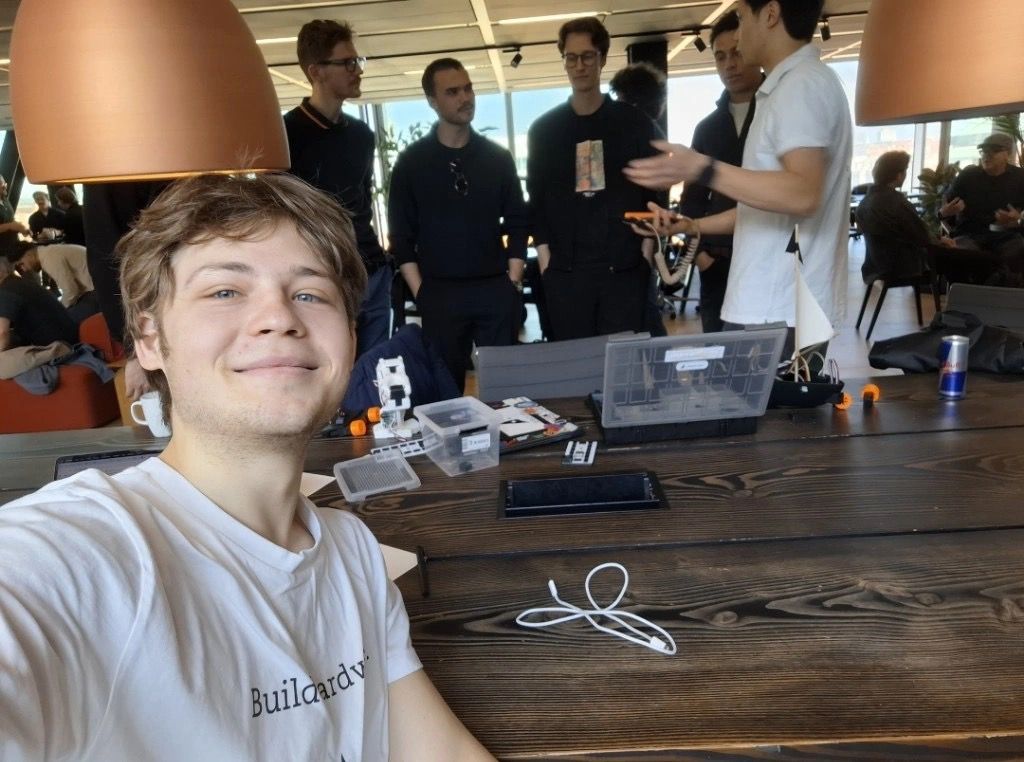
I first met Vladimir four years ago through Unge Iværksættere, the youth entrepreneurship organisation I co-founded.
Even back then, it was clear he had a rare entrepreneurial instinct. He had already been building and running ventures since high school, and approached things with a level of intensity that stood out.
After a few years of not crossing paths, I ran into him again at TechBBQ 2024. While most founders were standing by their booths, Vladimir was out on the floor, doing guerrilla marketing, walking up to people, pulling them into conversations, and actively seeking feedback on what he was building.
That same energy is now being channelled into Atech.dev, a platform pioneering hardware built directly from a prompt.
We sat down to talk about collapsing the gap between idea and physical product, why hardware is finally catching up to software, and what still does not work.

Q&A
Q: You’re building Atech around a pretty bold idea, that hardware can be built from a prompt. What made you believe that gap was ready to collapse now?
We are living in extremely interesting times. AI is becoming, or arguably already is, smarter than humans in many domains, and that changes how things get built.
Timing matters. We are in our early twenties during this shift, which means we can approach problems without too much bias from how things used to be done.
It increasingly feels like human ideas are the bottleneck, not execution. As an engineer, you are often surprised by how many trivial things do not exist. Now that iteration cycles are collapsing, more becomes possible.
At Atech, we have a vision that goes far beyond what we usually share publicly. AI is what allows us to build toward that faster than most people think is realistic.
Q: Software has had this “idea to product in a weekend” moment for a while. Why has hardware lagged, and what has changed?
You could argue that software is essentially a wrapper around hardware. It abstracts away complexity, which makes it easier to work with.
That has historically pulled talent toward software. More people building there means better tools, which further lowers the barrier.
What is changing now is that more people are starting to move into hardware again. That creates the same compounding effect, better tools, lower barriers, more builders.
You can already see it in things like 3D printing. What used to be industrial is now accessible, affordable, and usable at home.
Q: When you watch people use Atech for the first time, what surprises them the most?
The speed of iteration.
What would normally take weeks can now be done in minutes. By the end of a day, people have turned ideas they had in the morning into working products.
Q: A lot of tools make building easier, but don’t necessarily lead to better products. How do you think about that tradeoff?
Iteration is what drives quality.
The more you build, the more likely you are to find something that actually works. Volume creates better products over time.
That said, most tools, including ours, are still early. There is a lot of room to improve through continued iteration.
Q: You’re very close to the hackathon and student builder scene. What are you seeing there that the rest of the ecosystem is missing?
Hackathons are one of the fastest ways to test ideas and new features. You get immediate feedback, real usage, and a clear signal on what actually works.
Q: If building hardware becomes as accessible as writing code, what kinds of companies do you think start to exist that don’t today?
Smaller teams that move faster and build better products.
Lower barriers mean you do not need large teams or long timelines to get something real into people’s hands.
Q: Right now, what is the biggest thing that still doesn’t work, or feels broken, in what you’re trying to build?
We are on the right track, but it still comes down to execution.
More iterations, faster decisions, and a bit of luck.