Wilson Tukiainen on backing Nordic founders from day zero
Jun 11, 2026
4 min read
Author
Lucas Ohrt
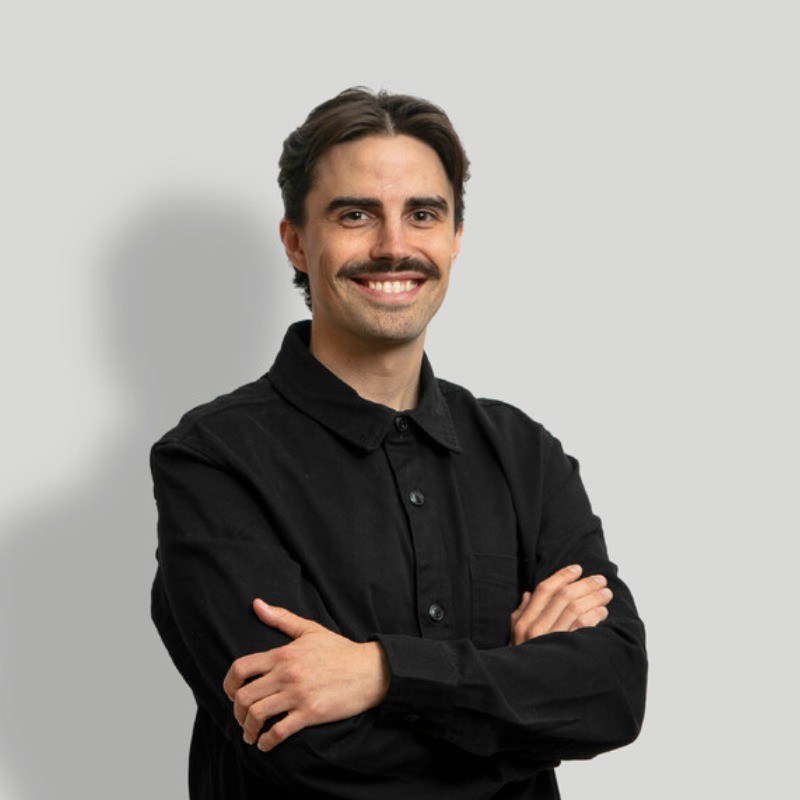
Wilson Tukiainen is an Investment Manager at Maki.vc, a Helsinki-based early-stage fund backing ambitious Nordic and Baltic founders from their first rounds.
Maki’s thesis starts from a clear belief: the Nordics can produce category-defining companies when technical founders build with global ambition from day one. The firm has backed companies across quantum, AI, fintech, infrastructure, and deep tech, often entering early and helping founders move from first conviction to international scale.
What makes Wilson’s perspective interesting is where he sits in the ecosystem. He is close to the earliest stages of company formation, from Aalto student founders and Finnish deep tech spinouts to companies working on space debris detection, metasurface antennas, quantum computing, voice AI, and technical software. These are not always obvious companies in the first meeting. They often come from technical or research-heavy domains where the question is not only whether the technology works, but whether it can become a venture-scale company.
Before Maki, Wilson worked across private and public markets and studied finance at Aalto University and the University of Amsterdam. At Maki, he has moved quickly from intern to Investment Analyst to Investment Manager, working across the entire investment process from sourcing to portfolio support.
The Nordics are entering a more ambitious phase. More founders are building for international markets from the beginning, more research is being pulled into startups, and ecosystems like Aalto are becoming important sources of young company-building talent.
We sat down to talk about what makes Nordic founders stand out early, why Maki wants to be involved from day zero, how to separate impressive research from venture-backable companies, and what the next generation of Finnish and Nordic founders is starting to look like.

Q&A
Maki describes itself as the first round partner for category-changing companies. When you meet founders at day zero, what makes you feel there is something unusually strong there?
That's a great question — and what I think is important to mention upfront is that there's no single founder type or quality that reliably translates into great companies. If there were, early-stage investing would be a solved problem. If you look at the Nordic unicorns and interview the founders behind them, you see a lot of variation in personality, background, style. So I'm always cautious about pattern-matching too hard.
That said, there are a few things we do look for that at least increase the odds. Curiosity is one — that kind of thinking outside the box, not accepting the first answer. Ambition level needs to be incredibly high, and personally I think it has to be rooted in something intrinsic — not money, power, or fame, but a genuine obsession with the problem. You can usually tell the difference pretty quickly in a conversation.
On the team side, complementary skills and backgrounds really matter. Diversity in how people think, what they've experienced, where they've come from — it helps teams see around corners. But honestly, a lot of it still comes down to getting to know the founders as people. If they're truly impressive, they'll make you excited — and then the work is validating that they're not just great salespeople, that there's real substance and track record behind the story they're telling. First impressions and how founders sell themselves and their vision are inherently subjective, but that validation piece is where you try to ground it in something more concrete.
One thing that's particularly relevant right now — especially for technical founders building software — is the combination of deep technical ability and commercial mindset. We have discussed this a lot internally and my colleague Paavo wrote about this on LinkedIn earlier this year. As software development is accelerating, the bottleneck is shifting: building has become easier, so knowing what to build is increasingly the hard part. The best founding CTOs today aren't just delivering software — they're driving product vision and technical architecture with a long-term lens, staying deeply connected to customers and translating that into a clear roadmap, and leveraging the latest tools to stay ahead. The role is evolving fast, and the founders who get that from day one are in a very different position.
The Nordics have produced companies across quantum, AI, fintech, infrastructure, and deep tech. What do you think the region does especially well when it comes to building globally ambitious companies?
I think most people in tech are aware of the stats by now — the New Nordic region consistently ranks at or near the top globally for unicorns per capita. Estonia alone has produced roughly 5–6 unicorns per million people, more than double the US rate. Sweden has given us Spotify, Klarna, King. Finland has Wolt, Supercell, Rovio. These aren't accidents.
When you dig into why, a few things stand out. The talent base is exceptional — strong technical education, high digital literacy, and universities like Aalto and KTH, that are genuinely producing world-class engineers and researchers. But talent alone doesn't explain it.
What I think is underappreciated is how the welfare system creates the conditions for risk-taking. Free tuition, social safety nets, universal healthcare — these aren't just nice social policies, they actually lower the floor for failure. Building a company is a realistic option here in a way it simply isn't in many other places. You're not betting your ability to feed your family or pay off student debt. That changes who tries, and how boldly they try.
There's also the cultural piece — flat hierarchies, access to role models, a small ecosystem where you can actually get a coffee with someone who built a billion-dollar company. And founders here have increasingly internalized that the home market isn't enough, so global ambition gets baked in from day one. That's a huge structural advantage.
You have looked at companies working on technically hard problems, from space debris detection to metasurface antennas and quantum. What makes you lean in when the product is not immediately obvious?
For me it always starts with the problem. What are they actually trying to solve, and for whom? Technology that exists in search of a problem is a very different conversation from a team that has spent years staring at a real, painful, expensive problem and is now building the technology to solve it. The former might be impressive — the latter is investable.
The product itself can and often will change. In deep tech especially, the initial form factor or application is rarely the final one. So I'm less attached to what version one looks like and more focused on: does this team have the conviction, the depth, and the commercial instinct to figure it out as they go? Are they the right people to navigate that uncertainty?
That combination — technical credibility plus the curiosity to follow the problem wherever it leads — is what makes me lean in when the product isn't yet obvious.
In research-heavy or deep tech companies, what is the difference between impressive research and something that can become a venture-scale company?
A lot of incredible research is being done that will never become a venture-scale company — and that's fine, not everything should be. The question I'm always asking is: what problem does this solve, and does the world actually want that problem solved — now, or at some clear point in the future?
Not all research-based problems have immense addressable markets or commercial urgency. A big difference I've noticed is whether the project originated from a real-world problem or from scientific curiosity that then went looking for applications. Both can lead to great outcomes, but the former tends to have a much cleaner path to product-market fit.
What also matters in deep tech specifically is the category question. Many of the most interesting companies we see aren't entering existing markets — they're creating new ones. That makes the market sizing conversation hard by definition, but it also means you're not fighting incumbents for share. You're building the category. Companies like that require a different kind of conviction, but when the timing is right and the team is right, they can be genuinely category-defining.
5. Maki invests across the Nordics and Baltics. What feels different in the ecosystem today compared with a few years ago?
There's never been a better time to build in the Nordics if you care about tech. Ten years ago we had some great success stories and the unicorns-per-capita numbers already showed real promise — but there was also less capital, fewer repeat founders, and fewer companies thinking global from day one. That has shifted dramatically.
What's happening in the Swedish ecosystem right now is genuinely exciting. For example - Legora and Lovable's recent rounds, several new YC companies and successful people spreading their experience to the ecosystem. I think that matters for the whole region, not just Sweden, because talented people see what's possible, they learn from each other, and more capital follows signal. Top-tier global funds are flying into Nordic capitals constantly now. And talent — the Nordics have always had high talent density, but people are actively moving here now, which is new.
I think we're already seeing spill-over effects in Finland and Denmark too. The energy in the ecosystem feels different.
The Finnish startup ecosystem is incredibly strong. If you look at what's grown out of Aalto's entrepreneurship society AaltoES — FR8, Kiuas, Silta, Junction, Slush — some of these movements are over ten years old and still going strong. Then you have newer energy: the Founders House launch here in Helsinki was genuinely impressive, Maria 01 where we're based is one of the better startup campuses in Europe, and MIMIR is doing important work on research commercialization. And beyond the typical startup ecosystem there's this incredible research happening at our universities and institutions that could actually solve major global challenges. That pipeline is real.
As someone who came into this ecosystem from the outside — I've been welcomed with open arms and I'm genuinely grateful for that. You constantly meet people who are incredibly smart and motivated, and the stereotype that Nordic people can't celebrate their neighbour's success? That does not hold in the startup world. People here root for each other.
You have spent time around Aalto’s founder ecosystem and student startup programs. What are you seeing in the next generation of Finnish and Nordic founders?
I'm genuinely impressed. There are a lot of hungry people who are dreaming big and have technical skills that put them at the genuine frontier of what's possible with AI and deep tech. They're active, they're pushing limits, and they're not afraid to try things that might not work — which is exactly the right attitude.
What I still want to see more of is the mindset to go after the biggest problems — the ones that actually matter at a global scale. The talent and the motivation are clearly there. But I want that energy to reach a wider audience, so that every talented individual — not just those already inside the ecosystem — gets the feeling that what they do can make a real difference, and that they just need to start doing it.
I wish I'd internalized that earlier myself, honestly. The gap between having the skills to build something meaningful and actually believing it's your thing to build — that's the real barrier for a lot of people. Closing that gap is where I think the ecosystem's next big opportunity lies.