Olivia on building Node.VC’s Danish Beachhead
Sep 12, 2025
3 min read
Author
Intro by Rasmus Holt @ BlackWood
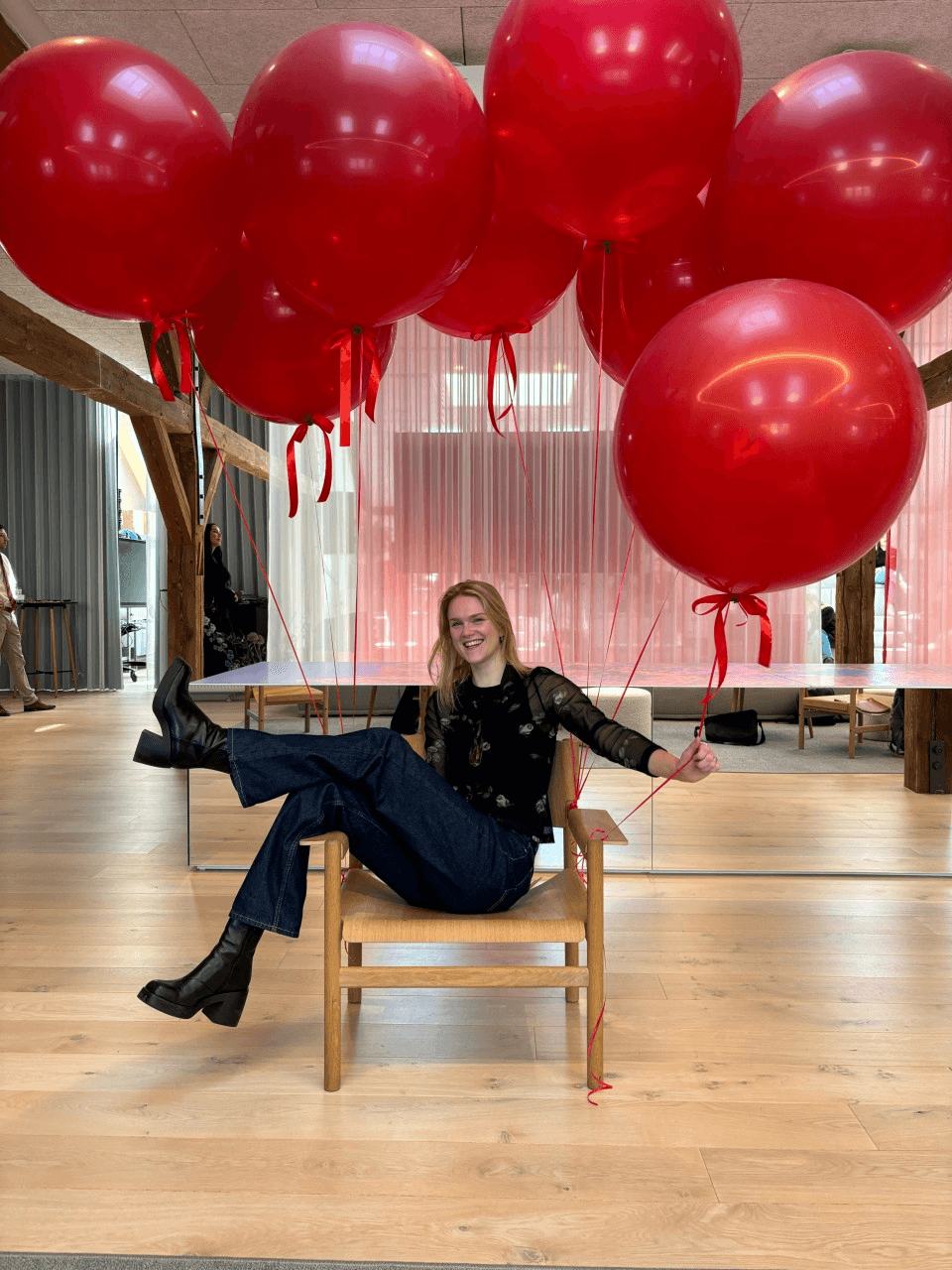
Oliva Lyng is building Node.VC’s beachhead in Denmark as the firm’s first full-time hire on the ground, tasked with sourcing, backing, and championing the next wave of Nordic technology founders.
She arrives with a rare, full-stack view of early-stage venture: from corporate VC at Maersk Growth to day-zero founder scouting at Antler, where she led the Copenhagen program scouting 150+ founders.
Before venture, Olivia cut her teeth in climate and carbon markets at South Pole, whose CEO and CSO are also co-investors with us in our portfolio company, Illuminem. She also led a 40+ person student consulting organization supporting Danish startups, and, in a twist that explains her passion for clear narratives, she even had a short stint as an award-winning playwright.
We asked Olivia a few hard-hitting questions - have a read!
Q&A - Olivia Lyng, Investor @ Node.vc
What’s something you believed in your investing career, about founders, markets, or success, that you’ve completely changed your mind about?
I started my career believing strongly in empowering young people to take on professional roles in startups. When I entered venture, I noticed some committing to the dogma: that only more senior founders with years of experience were worth backing.
At first, I struggled to find my own voice as a relatively young person in the industry and not simply default to that belief. Over time, I’ve found my voice more. I’ve seen how ambitious, energetic young founders can build transformative companies, and I’m convinced they deserve just as much attention from VCs. Luckily, the tide is shifting, and I’m excited to see this new wave of founders prove themselves.
Writing a first cheque is part art, part leap of faith. What’s the most irrational-sounding bet you’ve made that turned out to be right?
I think that true “irrational-sounding” bet is still ahead of me. At Antler, almost every investment felt a bit irrational, given how little time the founders had usually worked together. That’s why it’s been so rewarding to see some of the founders I scouted having early successes. At Maersk Growth, the approach was strategic and thesis-driven, so fewer of our bets felt irrational in that sense.
Now at Node.vc, I have more freedom to source and champion deals myself. I’m excited to strike the right balance between being bold and smart in the bets I bring forward, and I look forward to that first real “leap of faith” moment.
Are there small, almost invisible traits you’ve learned to spot in first-time founders, signals that others tend to miss?
I don’t believe there are easy truths or a simple recipe for what makes a great founder. What I’ve learned to pay attention to is more of a feeling: when I meet someone and think, “Wow, I’d want to work for this person.” That ability to attract smart, driven people, sometimes even convincing them to take a pay cut because they believe so strongly in the vision, is a powerful signal.
Tell us about a company you backed (or nearly backed) that didn’t work out, but that you still think was a beautiful idea. What did it teach you?
I was absolutely in love with a team building a way for people and organizations to protect their content from being trained on by AI. The team was stellar. Unfortunately, a co-founder break-up ended the business, which was heartbreaking to watch.
Trivial, but I really try to pay even closer attention to co-founder dynamics. Making a point of sitting down with each founder individually to really understand their motivations and dreams for the company. Still, just like in personal relationships, even the strongest-looking partnerships can break.
What’s a personal or professional misstep that still shapes how you work today?
A lot of my missteps have been tied to ego. Early on, I had to learn to recognize whether a problem was truly an unsolvable failure or just something that needed a couple of deep breaths before I could either fix it or let it go. Being young, I sometimes had my head too far up my own ass and tried to control things that were completely outside my influence. The lesson that stuck with me is simple: don’t linger on what you can’t change, focus your energy where you actually can make a difference. .. This is of course still a journey to always balance.
If you weren’t in venture, what would you be doing instead?
If I weren’t in VC, I’d be building my own company, not necessarily venture-backed, at least in the beginning. And I’d do it with my siblings, which could turn out to be either the best or the worst idea ever. One of my brothers works in ML and neuroscience, the other in psychology, and my sister is an AI consultant. Together, we could create something at the intersection of brain science and technology, perhaps a platform that uses neuroscience and AI to decode mental health patterns and develop more personalised ways to understand, prevent, or treat conditions like depression. I know, red flag with that many siblings, but that would be my choice, for now.
Or, I’d be in a completely position and write film scripts, which was my teenage passion.
What’s one question you wish founders would ask you, but rarely do?
I wish founders would ask me: “What would make you say no to this deal? It opens up a really honest conversation. Instead of just guessing what’s going on in an investor’s head.