Cleantech running cold?
Jul 11, 2025
3 min read
Author
By Maxime Pasquier, Investor & Rasmus Holt @ Blackwood
There’s been a great deal of attention on the 71% decline in European cleantech funding. Taken in isolation, it looks alarming. But when you consider the composition of last year’s numbers, the situation becomes much more rational, as Sifted reports.
A significant portion of 2023’s funding spike was driven by a few outsized infrastructure and manufacturing deals, capital-intensive projects necessary to scale industrial capacity. Many were debt-led and designed to deliver long-term assets, not quick returns. Some are progressing well. Others, inevitably, will fall short. Either way, these are not transactions you repeat annually.
What matters more is what hasn’t declined: early-stage equity. That’s where the signal lies. Investors continue to back new ideas, teams, and technologies. Despite broader market volatility, capital is still being allocated at the formation stage, despite growing aches in the mature part of the stages.
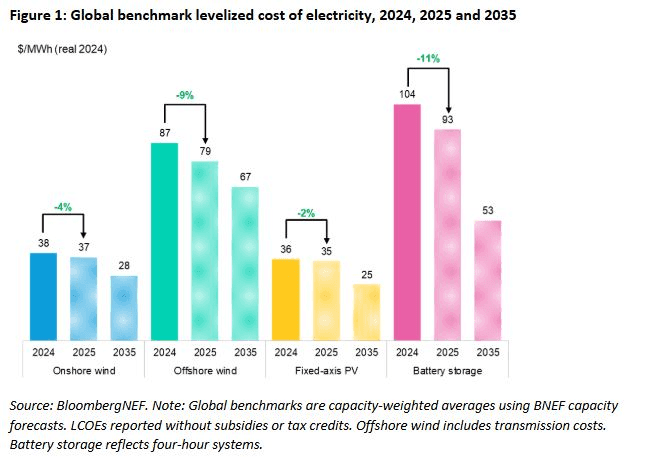
The underlying thesis remains intact, as the cost of renewables continues to fall. Solar is deeply cost-competitive, a result, in part, of a decade of Chinese industrial investment that brought down global prices. China has already installed 887 gigawatts of solar capacity, reaching its target ahead of time and outpacing most other markets by a wide margin.
It directly affects the cost base and feasibility of projects around the world, even to the point where most deem it deeply anti-competitive. They distort market prices, create unfair advantages for subsidized firms, and can hinder innovation and overall market efficiency. However, who doesn’t like cheaper energy.
Electricity demand is increasing, as the electrification of industry, transport, and even data infrastructure continues, regardless of short-term policy noise. The need for resilient grids and scalable, low-carbon solutions isn’t going away.
This current shift in capital flows can be interpreted as a warning sign. More likely, It is the market doing its job, re-allocating resources toward models with real commercial viability, proven execution, and clear economic logic.
For founders building serious businesses, the capital is still available. Terms may be tighter, diligence more rigorous, but disciplined teams are finding support. Some think it’s a sign of disinterest. We think It’s a return to form.
I’d argue this is when the most durable companies are formed, when capital rewards execution over narrative, and when investors start distinguishing between noise and signal!