Coinbase and the Rise of Embedded Crypto
Jun 20, 2025
4 min read
Author
By Maxime Pasquier, Investor & Rasmus Holt @ Blackwood
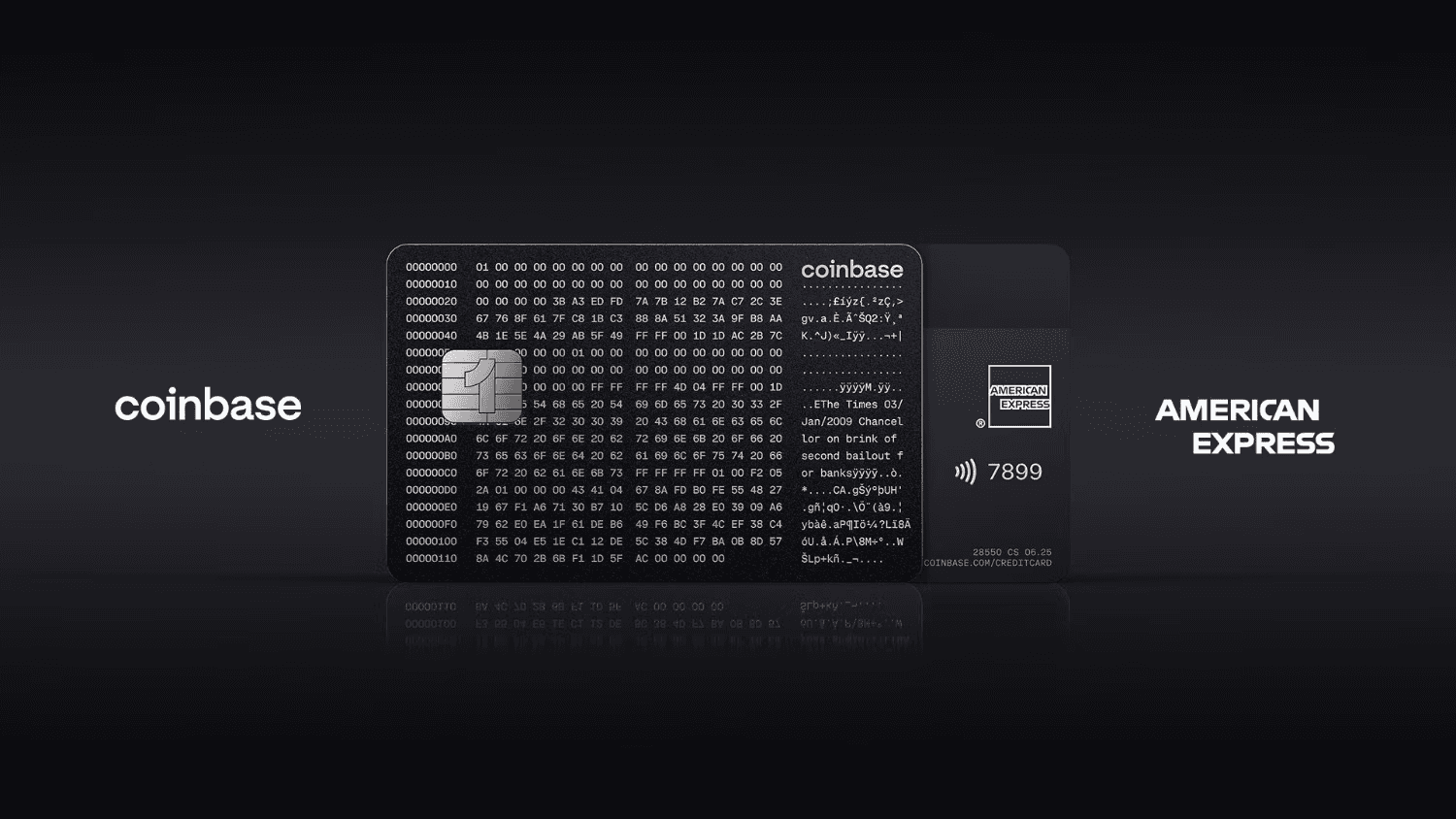
Over the past decade, Coinbase has often been treated as a bellwether for the crypto economy, tracking the highs of market exuberance and the inevitable lows of correction. But today, its trajectory tells a different story. Coinbase is moving beyond the role of marketplace or custodian. It is beginning to operate more like financial infrastructure: stable, integrated, and increasingly indispensable.
This evolution reflects a broader shift within fintech, away from speculative edge cases and toward embedded functionality that solves real, persistent problems for businesses and consumers alike.
The Coinbase One Card - Crypto as Habit, Not Hedge
Coinbase’s recent collaboration with American Express to launch a Bitcoin-reward credit card is, on the surface, a familiar fintech play. It mirrors existing rewards programs in structure, and fits neatly within the broader loyalty economy. Yet its significance lies in the framing: crypto not as an exotic asset class, but as a normalized consumer benefit.
When users earn Bitcoin passively through everyday spending, they are not making a bet, they are forming a behavior. This is crypto becoming invisible, and by extension, inevitable.
USDC on Shopify - Payments Meet Product-Market Fit
In parallel, Coinbase’s integration of USDC payments for Shopify merchants, via its Base network, removes friction from the transaction layer itself. Zero merchant fees and instant settlement offer clear advantages over incumbent payment processors. The proposition here is straightforward: faster, cheaper, and programmable money for real-world commerce.
What’s more important is the strategic positioning of Base. In enabling stablecoin-native payments in high-volume retail environments, Coinbase is not just supporting transactions, it is laying down infrastructure. The long tail of commerce is now within reach, and the margin story is compelling.
Coinbase Business - A Platform, Not Just a Product
The launch of Coinbase Business further extends this thesis. With a suite of tools targeting startups and SMBs, ranging from treasury management to crypto-denominated payouts, it addresses operational needs that are especially acute for global or distributed teams.
The self-serve design, API-first approach, and embedded yield on idle USDC are signals of product maturity. More importantly, they reflect a shift we’ve observed across the early-stage ecosystem: founders want speed, autonomy, and optionality. Crypto, when integrated thoughtfully, can deliver all three.
Coinbase is no longer positioning itself as a gateway to crypto. It is becoming a financial operating layer, abstracting complexity and unlocking utility. This is the quiet path to permanence.
For founders, it opens new vectors for product and revenue.
For investors, it affirms that compliant, integrated crypto-fintech is not just viable, it’s valuable.
And for the broader market, it suggests that the next wave of financial innovation won’t look like speculation. It will look like infrastructure doing its job.
More here: American Express, CNBC & Coinbase