Conviction, Bias, and Building in Senegal
Oct 10, 2025
3 min read
Author
Intro By Bastian Larsen, Founder & CEO @ Blackwood
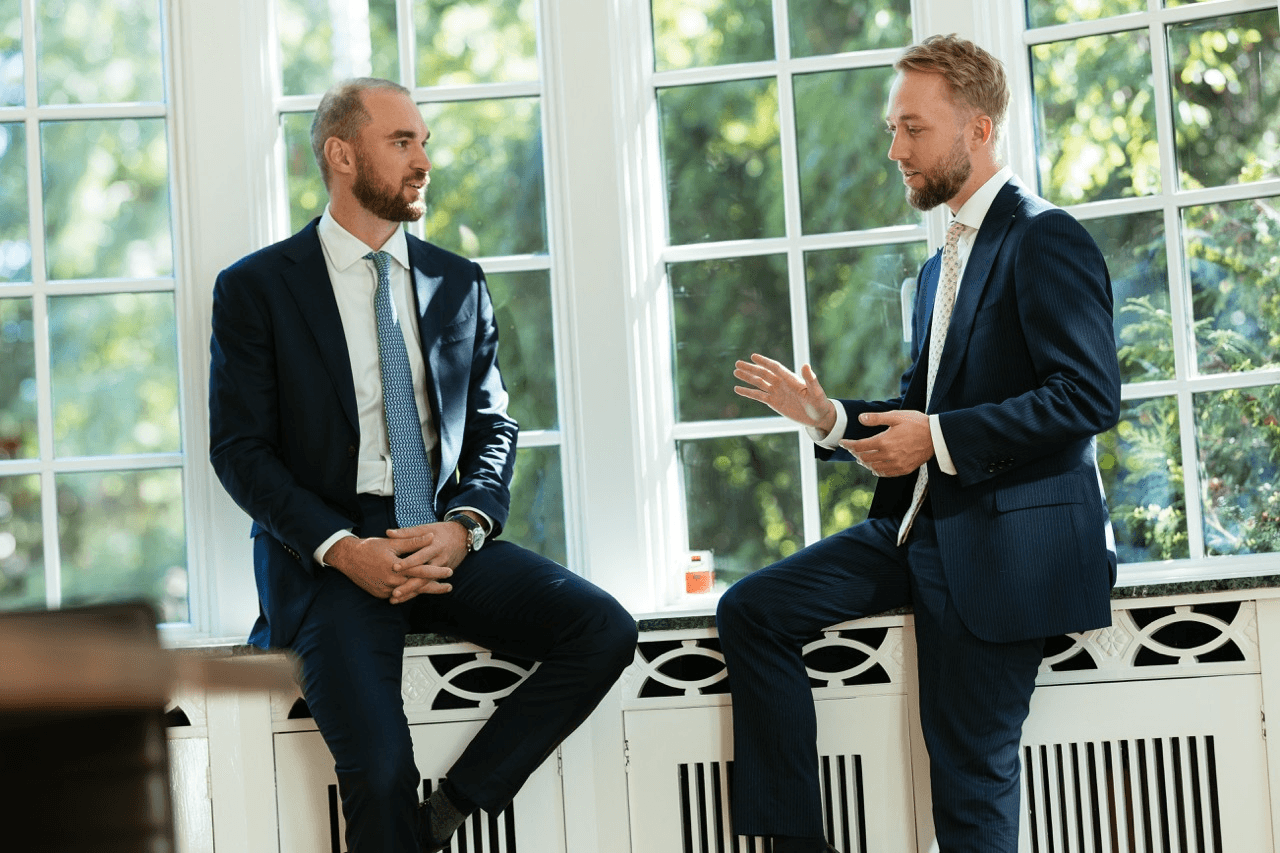
Thomas helped build BlackWood like a startup, turning a sketch of a firm into a disciplined platform that closed Fund I and scaled across Europe. He's now moved on to greener pastures as Chairman @ Dakar Intérim Sécurité.
He shaped our operating cadence, hiring, and portfolio support, then taught VC at HEC Paris and published whitepapers with professors on purpose-driven leadership and decision bias.
Now he is back in Senegal, chairing Dakar Intérim Sécurité and starting a new chapter focused on real-economy impact.
We want to celebrate his work at BlackWood and hear what comes next, so we prepared a few questions.
Q&A - Thomas Derambure, Former COO & Founding Partner @ BlackWood
You often said we should run the firm like a startup. What did that mean in practice?
It’s a fact that we were a startup investing in startup, and we should take advantage of this. Investing in early-stage companies requires, in my opinion, having an entrepreneurial mindset yourself. As BlackWood had just been launched, it was a young, hard-working team, and most people were here for the vision, and were thriving to build an exceptional VC Manager. I think that people who choose to join such a company over an established player must possess a strong entrepreneurial drive themselves, so my goal was to protect that spirit to identify and support the most driven founders.
Which part of Fund I’s build was the hardest to get right: hiring, reporting, or portfolio support? Why?
The hardest thing, for me, was not to overkill the due diligence processes. As I was in charge of the investment process. Writing your first checks is quite a big deal, and there is a limited amount of evidence you can gather in early-stage investing to form an opinion. Forming conviction, without delaying investments with unnecessary requests or data, is a difficult equation. On the best deals, VCs are also competing with each other, so you risk losing the deal if you take too long. I think the reason why emerging managers overperform is simply because every check is a big deal, but the first ones.
Why return to Senegal now, and what is the core problem you want to solve there?
Returning to Senegal feels like returning home to me. The country is facing exceptional opportunities and specific challenges. Growing up in Dakar, basically raised in the family business, and then studying and working in Montreal, Paris and Copenhagen, provided me with very strong convictions about entrepreneurship in Senegal.
The biggest problem I want to solve is access to capital for promising businesses, being SMEs or startups. Many investors do not trust the SMEs in the region, and many successful business owners do not trust the investors either. I think that copy pasting the dominant occidental model here creates that friction. If you 100% own a profitable SME with tremendous growth opportunity, in a country with an 8% GDP growth rate, would you let a PE fund get in, if they tell you they will force you to sell the rest of your family business in 5 years? Many exceptional entrepreneurs refuse that option, and these are the ones we want to partner with, and provide access to capital to.
You wrote about purpose and cognitive bias in VC. Which bias did you see most often inside firms, and how do you counter it on the ground?
I believe information transmission and explanation biases are both extremely present in VC. They are inherent to decision-making processes involving multiple stakeholders or committees, and are exacerbated when you base a decision on a mosaic of information instead of quantified metrics.
We wrote a full white paper with a Harvard professor to decipher it as much as possible.
But in a nutshell, if you do not sincerely evaluate and communicate on the reliability and likelihood of your information/remarks, or if you do not actively take steps to decouple the persuasiveness of each member from the validity of their arguments, then you are at risk of taking biased decisions. It can sound obvious, but the level at which information transmission impacted the perceived reliability of an information was a big surprise to me. Pr. Graeber showed that quite often, when people share an information, the belief they have about its reliability is not properly communicated, and information of different reliability levels end up being treated as equally reliable.
The best and simple way to counteract this bias was to openly question or challenge the reliability of any data point substantially affecting the decision.