Day-Zero Founder Signals and the Rise of Femtech
Nov 14, 2025
3 min read
Author
Intro By Rasmus Holt @ BlackWood
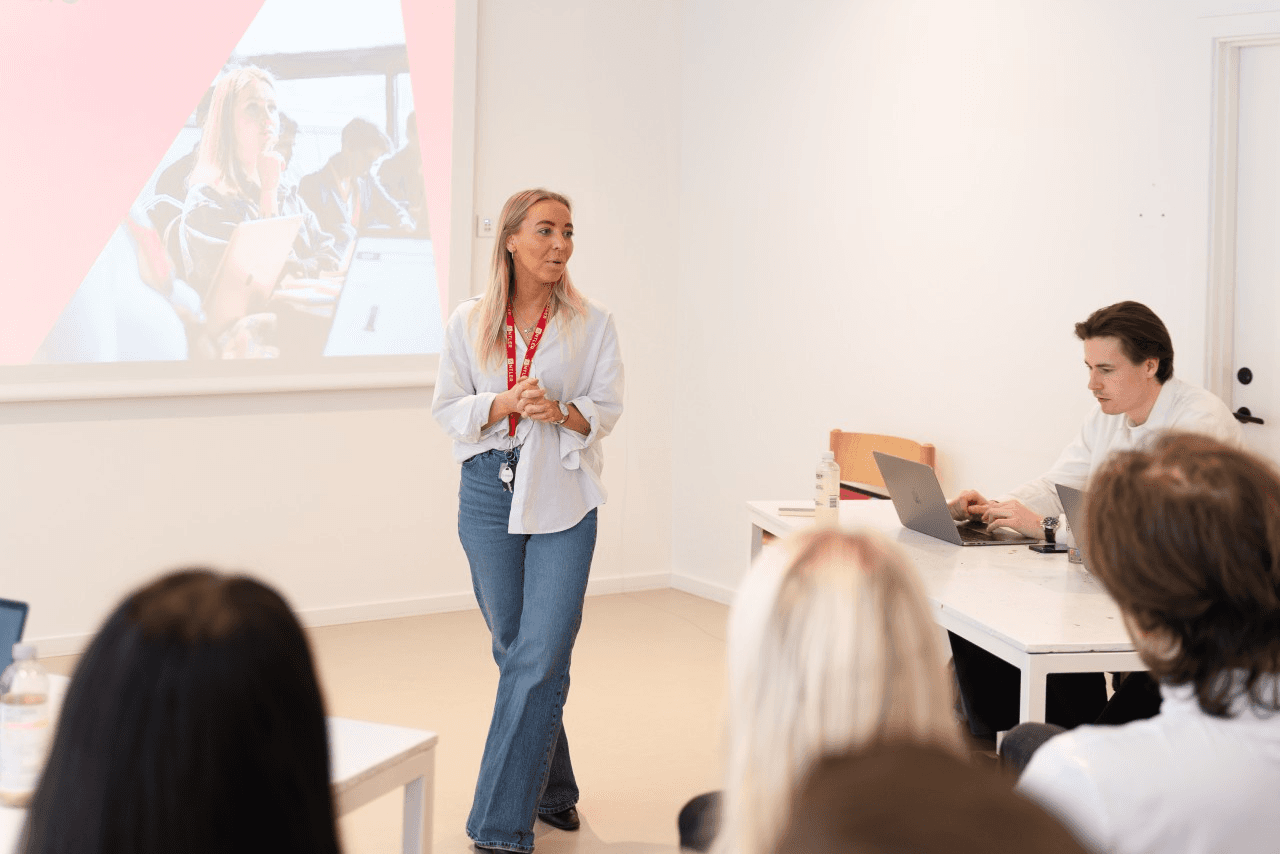
Clara Reich is part of a new generation reshaping European venture capital.
Antler is one of the world’s most active early-stage investors with more than 1,800 portfolio companies globally, backing founders from the very first idea.
Beyond investing, Clara focuses on strengthening the ecosystem itself.
She’s the founder of Femfulness, a platform promoting education and collaboration in women’s health, and co-founder of WVC, a Copenhagen-based network for women in venture capital. Both reflect the same mission that drives her work at Antler: helping more people build, invest, and lead.
We sat down with Clara to talk about what makes founders stand out at day zero, the rise of femtech, and how a new generation of investors is changing the texture of European venture.
Q&A - Clara Reich, VC at Antler
Antler meets founders earlier than most VCs. What are the patterns or signals that convince you someone has what it takes to build from zero?
Yess, at Antler, we often meet founders before there is a product or even a full team in place. Of course, we look at market, competition, and financials, but at this stage, it’s really about whether we believe that the founders have what it takes to figure it out along the way.
Our Antler model is quite hands-on, where founders usually work from our office for a few weeks before we invest, which gives us the chance to observe the small but important signals.
Some of the patterns I keep coming back to are clarity, communication, and grit. How someone articulates what they are building and interacts with others usually says a lot about their ability to attract customers, early hires, and investors. And grit is not only about who stays the latest in the office, but also how they take feedback, how they improve week over week, and whether they have the drive to keep finding ways forward when things get tough.
You’re behind both Femfulness and WVC. How do these communities complement your work as an investor?
Personally, I really enjoy engaging in the startup ecosystem and connecting with new and like-minded people. And my projects, like Femfulness and WVC, started as a desire to build spaces that I personally felt were missing. Over time, they have definitely complemented my work as an investor.
As many others, I believe, the best investors have a bit of a founder mindset, and even though I have not built a tech company myself (yet!), these projects have given me somewhat of a similar mindset, asking questions like: What’s the problem we are solving? Who are we creating value for? And how do we scale it?
With Women in VC (WVC), which I recently co-founded with Annie Hult, I can see how it directly complements my work by connecting with other investors and sharing deal flow. At the same time, this initiative it’s also about being a voice for bringing more women into VC and startups, and making the ecosystem more accessible for the next generation.
There’s growing attention around femtech, but funding still lags behind. What’s the biggest misconception you encounter when investors evaluate this space?
The classic one is that it’s a “niche” category or “too small” a market. In reality, women’s health represents a $1 trillion global opportunity, with massive unmet needs and commercial potential. You can check out the McKinsey report to learn even more about the data on this.
Ironically, investors usually like to back founders tackling big and painful problems with a strong founder–idea fit - but in this space, there’s unfortunately still a lot of misconceptions, usually rooted in bias or simply lack of knowledge.
Another assumption is that you need to be a woman to invest in or understand femtech. The best investors are curious, data-driven, and willing to learn. I actually spoke about how men can engage meaningfully in this space with Torsten Kolind, a male investor in femtech, in our podcast. Listen here if you are interested.
Working with founders at the earliest stages must bring plenty of pattern recognition. What’s one common mistake you see first-time founders make, and how do you help them course-correct?
Working with founders from day zero, and some first-time founders, there are definitely a few patterns. The first one is simple: not validating or starting to sell early enough. Some think that you need to build something and then try to sell it, but it’s usually a waste of time to build something no one wants. Get out early, test, iterate, and learn fast. Speed and feedback matter far more than perfection at this stage.
The second mistake, which is not always as obvious, is building for the sake of building. Starting a company is a long game, so you have to deeply care about the problem you are solving, because if you lose interest in it too soon, it will be hard to keep the motivation over the years.
Finally, some founders fear sharing their ideas. But at Antler, we try to remind them that the idea itself isn’t worth much - it’s the execution. The more you share with others, the more you will learn.
If you could design one change in Europe’s startup ecosystem to accelerate inclusion and innovation, what would it be?
I think it would be to unlock the untapped potential among women who could be future builders. There are incredible initiatives already - like imagi by Dora Palfi inspiring girls to code, and Lovable’s SheBuilds - but we need even more intentional effort on this front.
Antler and Femcode Collective are hosting a coding event for women next week at Slush, as one of the things. Sign up here.
The new AI era will shape the future in so many ways, and my hope is that women will have just as much opportunity to shape it. That means lowering the barriers to entry and driving effort from different levels, such as education and policy, to the startup ecosystem and investors.