Ebba Forsberg on Building Conviction Before the Market Exists
Apr 24, 2026
4 min read
Author
Lucas Ohrt
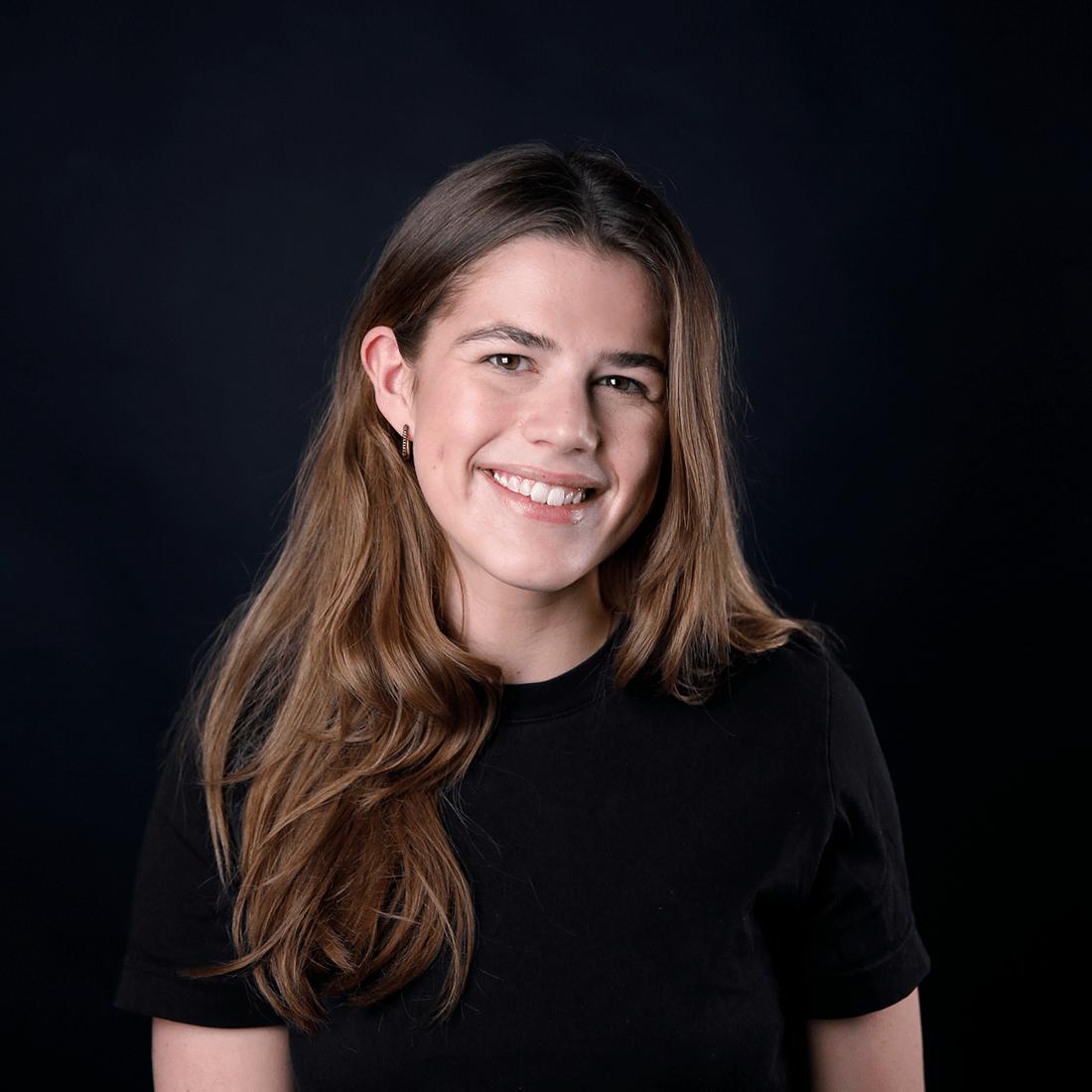
Ebba Forsberg has been a close friend of the BlackWood team for a while now. Through her work at Norrsken Evolve, backing founders building across Europe's most critical industries, she has been someone we have stayed closely connected to and consistently learned from.
What stands out with Ebba is her way of thinking. Structured, grounded, and with a clear ability to cut through complexity in areas where most default to surface-level narratives. She works with founders at a stage where very little exists beyond conviction, and she has developed a sharp eye for separating what is actually real from what is just well-packaged.
Europe is going through a shift. Energy, supply chains, manufacturing, even democracy, things that used to feel stable now look fragile. The conversation has moved from optimisation to resilience. Ebba sits right at the centre of that.
We sat down to talk about how you build conviction before the market exists, why "impact" is often misunderstood, and where investors are still getting it wrong.

Q&A
Q1: Norrsken Evolve is built around the idea that Europe is at a defining moment. How does that actually change what you choose to invest in?
Our core thesis is: we invest in pre-seed founders creating solutions for a resilient and sustainable future. They are the leaders, the visionaries, who will redefine how we generate energy, move goods, construct buildings, produce food, treat our sick, secure our information, and safeguard our societies from disruptions.
I would say that Europe being at a defining moment doesn't change what we invest in — it just reaffirms why it matters more than ever. Given the world we're living in today, these problems are high priority now. What I'm seeing is more and more founders positioning themselves as Europe-first, building resilience infrastructure here.
So to answer your question: we built our thesis around these beliefs before the moment felt this urgent. But the urgency means we're seeing more of what we want to back.
Q2: You look at thousands of startups each year. What makes something stand out immediately versus blend in?
Two things make me push something forward personally:
I know you've probably heard a lot of investors say 'it's the founder' — and I'm going to say it too (let's be real, it is crucial), but let me try to actually show what I mean: I met a founder recently working on a mission-critical industry problem, tons of regulations.
Her starting point was basically: 'what is the biggest problem out there when it comes to emissions and why has no one done anything about it?' Regulation kept punching her down. The industry was painfully slow-moving. When I met her again, she hadn't quit. She'd pivoted, gotten closer to the core problem, and come back with something stronger. That's the thing that makes me go wow.
The second thing — and this is becoming more and more important — is the solution actually novel? It gets more difficult for us to assess this given the barrier to entry for building in different spaces. You can look at the execution angle of course, not shying away from that. But when talking about standing out, it's something backed by research, maybe a breakthrough in a specific sector. In today's climate, founders need to talk their edge more than ever. How can you build something that is not replicated by a prompt?
Q3: You invest at pre-seed into problems like energy, infrastructure, and resilience. What does “early conviction” look like when the problems are this big?
Honestly, early conviction for me often starts with a founder educating me. I leave some calls genuinely thinking — wow, I had no idea this problem existed at this scale.
Then I take a step back and ask myself: what needs to fall into place for this to become big? Okay, we have that list. Now add a layer — do we feel convinced this team will solve it, or that the world is heading in their direction? What I'm looking at is the shape of their wedge. Something like a new innovation that cuts 95% of energy use from an LLM query, or a novel new material. A wedge small enough to actually start with, but that's clearly the first door into a much larger upside.
And there has to be some urgency in it — because unfortunately I don't have the superpower of seeing the future. I wish I did, maybe. So what we have to work with is: what do we see today, where can they start today, and does that entry point lead somewhere that we believe the world is heading?
Q4: A lot of companies position themselves as solving climate or societal issues. What signals tell you it is real versus just well-packaged narrative?
Honestly? I can usually sense it pretty fast — I can't read minds, unfortunately — but there's something about how a founder talks about their problem that tells you whether the impact is real or just an solution they easily came across. We also ask ourselves the question: if this company succeeds and scales, does it actually move the needle? Will society be meaningfully better, and even more so the bigger they get? If the answer is yes, the impact is real.
Let me break that down with examples. A company building a healthcare solution to transcribe patient meeting notes — the business model works on its own, but they also enable faster patient treatment, which means more people get helped.
At pre-seed this is hard. The companies are building on visions and the belief that this will happen in the future, not now. So as I said in the beginning, we often ask ourselves those types of questions to identify if it is just a signal or a well-packaged narrative
Q5: When everything from energy to democracy feels urgent, how do you decide what matters most right now?
I mean, the honest answer is — I don't think you can rank it. I've gone deep into problem spaces this year to come out of each one thinking wow, this is very very very urgent.
I think you can look at this in two buckets.
The first is what's urgent right now. The huge release of CO2 from industrial processes, or the gigawatts of renewables stuck in grid queues. This is happening today. A solution isn't nice-to-have, it's needed, now. But we're investing at pre-seed, so we're on a long journey with these companies.
The second bucket is: will this still need a solution in five years? For instance: The energy transition, the data center boom, advanced manufacturing. Everything pours down to having a resilient supply chain. Demand is far outpacing the investment needed to increase supply, which takes many years.
But there's a third layer — urgency alone isn't enough. We need an outstanding founder. We're not going to invest in democracy solutions just because democracy matters. Unless there's a founder who makes us think this person will actually solve this, the problem alone being urgent doesn't get us there.
Q6: Where do you think investors, especially in Europe, are getting this category wrong today?
So I actually turned this question around. Every year we welcome entrepreneurs that we backed to Stockholm. I asked a few — where do investors get it wrong? What I got back:
We can evaluate deep tech companies like they're software companies. When a founder is building a new class of material or a new way to store energy — something that literally didn't exist before — you can't assess that the same way you assess a new interface on top of an existing database. The risk profiles are completely different. Tech risk looks different. Timelines look different. If an AI model can replicate a software product within weeks of launch, the edge of those businesses relied on gets thinner. But nobody's replicating novel battery chemistry with a prompt.
And one more thing — I think we need to get better at backing bigger, bolder bets in game-changing industries. But not because it's built in Europe. That can't be the reason alone. The solution has to be better.
Q7: If we sit down again in a year, what would you want to have changed your mind on?
I have tons of things. I genuinely find myself saying 'I wonder how this will look in a year' almost weekly, given the pace everything is moving. I could go broad — there's so much I'd love to see change on a global, macro level. I want us to stop looking at what other continents are doing and start believing in what we can achieve ourselves. But if I take it down to something personal, it's the health space. I want to see us invent more with AI in healthcare — actually saving lives, curing diseases we haven't been able to cure before.
That's why I love working at Norrsken Evolve. Our mission is to invest in founders solving the world's most pressing problems — and I get to sit at the forefront of that every day. I get to meet the people who are actually building these solutions, not just talking about them.
So if we sit here in a year, I hope I've seen more of those founders succeed — and that we look back and think, how did we ever accept that we couldn't solve that?