Laurits Bornæs of Denmark’s Sovereign Fund on the Next Deeptech Wave
Nov 7, 2025
2 min read
Author
Intro by Rasmus Holt @ BlackWood
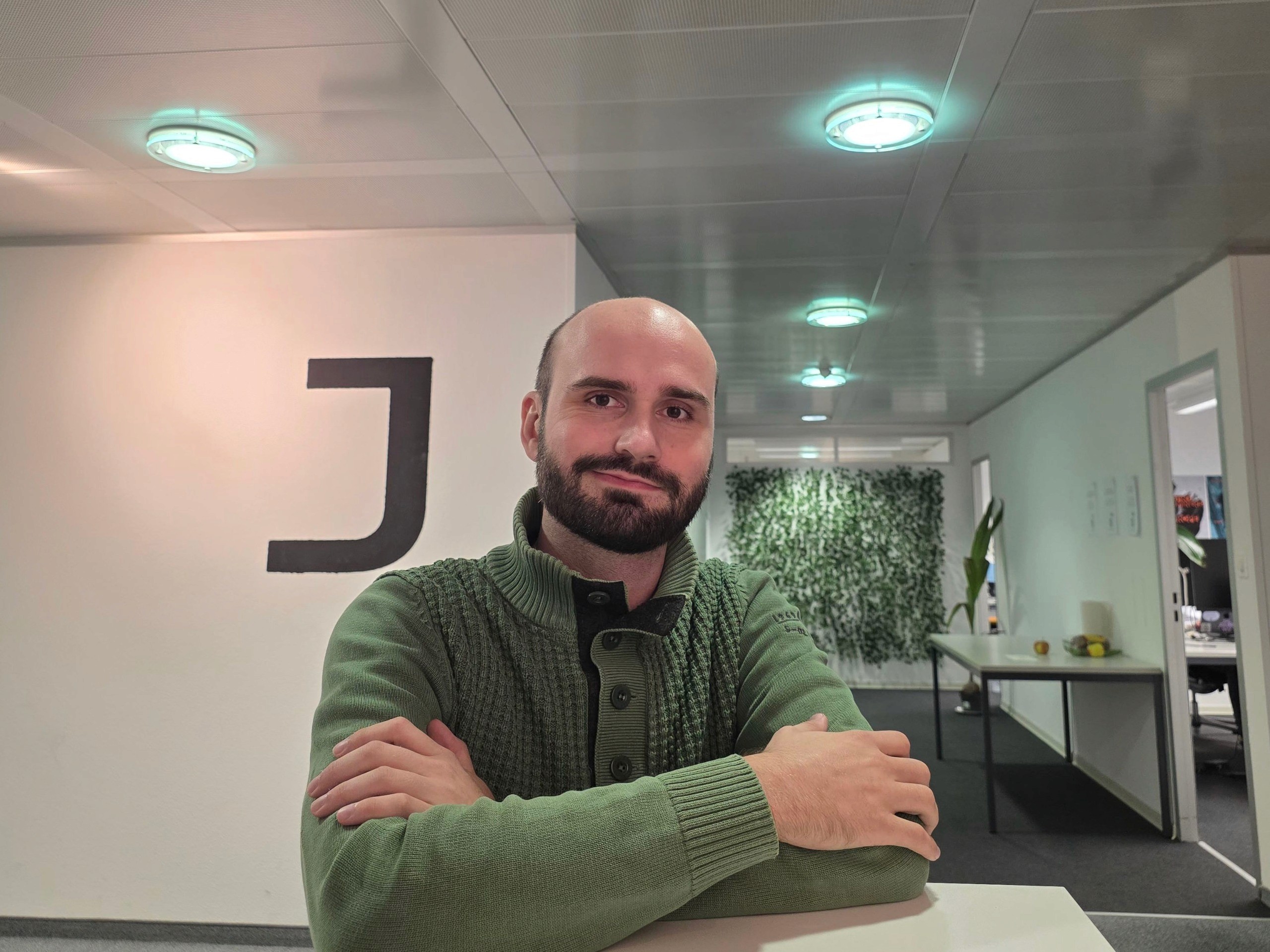
Laurits Bornæs spends his time where Denmark’s most ambitious tech companies meet state capital…
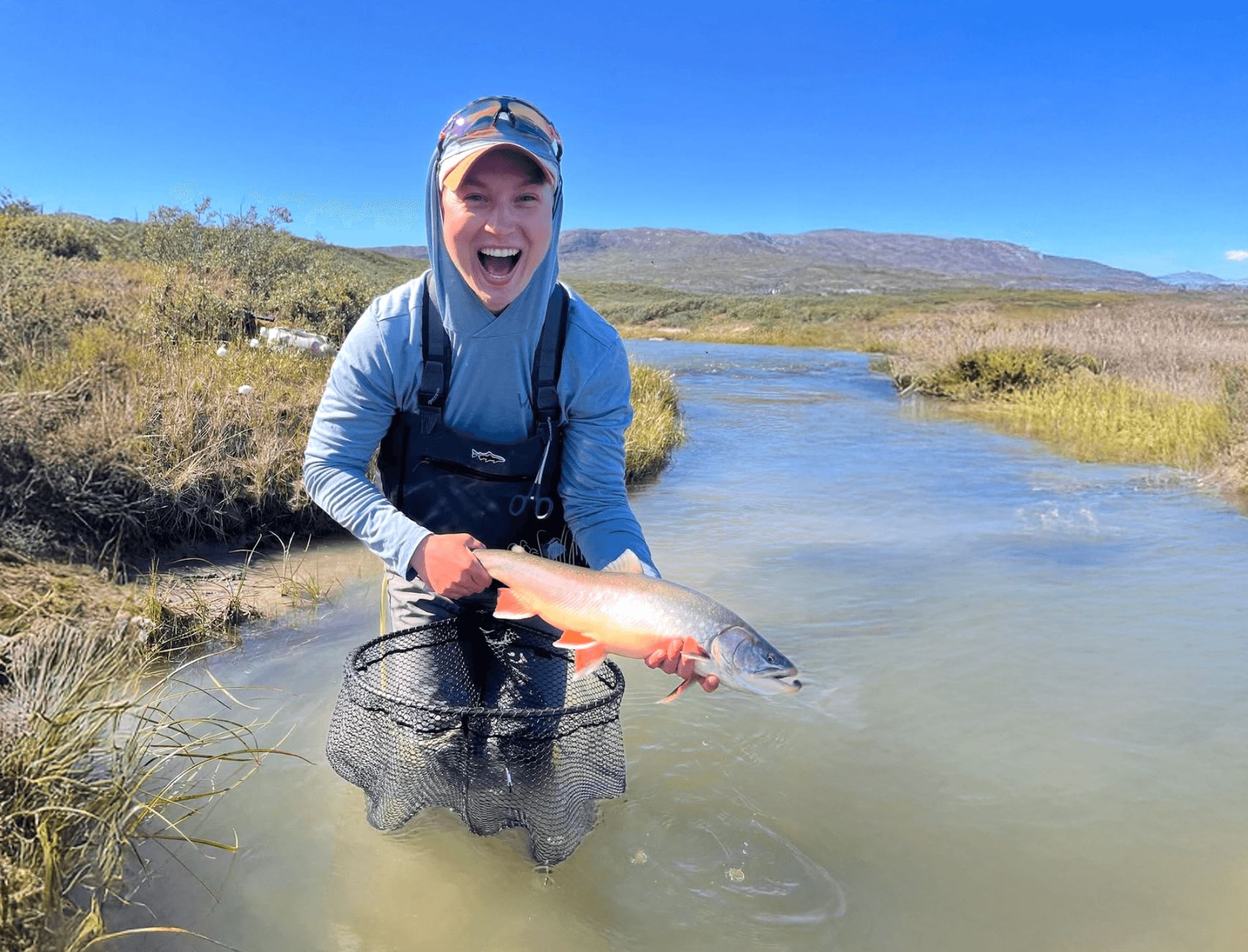
…and, when he’s off duty, engaging in sustainable aquatic protein capture in remote places like 64°48’31.9”N 51°02’39.0”W, where he sourced a fine dataset (n=100) of the local fish population. One of the finer specimens of an Arctic char the size of an admirable seed-stage round can be seen below.
Anyway… last week, EIFO joined the preliminary talks on the Scaleup Europe Fund, a multi-billion initiative led by the European Commission with private investors including Novo Holdings, Wallenberg Investments, and APG. That’s big news. And welcomed news, as the fund aims to close Europe’s late-stage capital gap.
Staying with recent developments, Laurits & EIFO were investors in Podimo (raised over €200 million). Podimo was co-founded by Sverre Dueholm, who has since gone on to launch comundo, now part of BlackWood’s & EIFO’s portfolio as announced above.
As part of EIFO’s Direct Investment team, Laurits helps back startups and scaleups that push beyond national borders, from early bets like Performativ and Lotus Microsystems to growth stories such as Keepit and Orbex, Europe's leading orbital launch services company.
We caught up with Laurits to talk about how EIFO thinks about risk, the new wave of Danish deeptech, and why public investors might just be the catalysts behind Europe’s next generation of breakout companies.
Q&A - Laurits Bornæs, Investor at EIFO
EIFO often takes a long-term view in markets where private investors hesitate. What does patient capital look like in practice when you’re investing in high-risk tech?
For us at EIFO, patient capital really means being willing to take a long-term view - especially in areas where private investors are often more hesitant.
You can see it clearly in how we approach DeepTech. We have two dedicated teams working in Life Science and the Green Transition, where technologies usually take longer to develop than, say, a typical software company. In our broader tech focus, we’ve also been leaning into fields like quantum and semiconductors - areas that demand time, persistence, and genuine belief in the long-term potential.
You work with founders across very different stages, from early hardware startups to global SaaS players. What signals tell you a founder is ready to scale beyond Denmark?
It really depends on the sales motion. For companies with an inside salesled approach, I look for proof that they’ve built a scalable sales model - where you can see a clear relationship between the effort or capital invested and the return generated. In other words, when putting X in consistently gives you Y out, you know you’re ready to scale.
But for companies driven by product-led growth or strong marketing, the picture is different. Those businesses can often go international much earlier, since their model allows them to reach and engage users across larger regions from day one.
EIFO’s mandate blends policy and profit. How do you personally balance those two forces when assessing an investment?
The good thing is that, in many cases, those two goals actually align. The companies that create the biggest positive impact on society are often the ones that become the most successful and profitable as well. It is especially true when you back strong founders building solutions to real, long-term challenges.
Having founded a company yourself before joining EIFO, what’s something you now understand about founders that you didn’t when you were one?
I actually think I learned more about founders from being one myself than I ever could as an investor. But what I didn’t fully appreciate back then was just how powerful the “how hard can it be?” mentality really is.
I’ve seen that same mindset in so many successful founders with that mix of optimism and grit that keeps you moving forward when things get tough. Because honestly, if any of us truly knew how hard it is to build something from scratch, I think a lot less company would be started.
What’s a decision or deal that really tested your conviction, and what did you take from it?
Honestly, every deal tests your conviction in some way. No matter how structured your process is or how carefully you build your bull and bear cases, it’s easy to get carried away - either by being too optimistic or too cautious - and miss something important. So I would say that it gets tested everytime I help support a company.
Each investment forces you to balance belief and discipline, and to stay self-aware enough to challenge your own assumptions.
If you had to pick one trait that separates strong early-stage founders from the rest, what would it be?
All answers to this question tend to sound a bit cheesy - because everyone ends up saying things like execution speed, high agency, curiosity, learning ability, first-principles thinking, or high conviction. And the truth is, I’ve never met a founder who has all of those - some even contradict each other. But if I had to pick one trait that really stands out across the best early-stage founders, it would be speed. The ability to move fast, learn fast, and adjust quickly seems to be the most consistent differentiator I’ve seen. But again sometimes being a bit more thoughtful with decision is better than just “moving fast and breaking things” if you each iteration is very expensive.
If you could change one thing about how Denmark (or Europe) funds innovation, what would it be?
I’m going to cheat a little and say two things.
First, I think we need to do a better job of celebrating the people who actually try to build something - and be more accepting of those who fail along the way. Failure is part of innovation, and we should treat it that way. Making it more socially acceptable.
Second, we need to make it more attractive to build companies in Europe. That means easing regulation in certain areas and creating a more appealing framework for employee ownership - making warrants and ESOPs more competitive globally.