Paranoid or Prepared? Philip’s Contingency Play
Mar 27, 2026
8 min read
Author
Maxime Pasquier

A lot of founders talk about building for uncertain times. Philip Wissén has just launched a company built quite literally for when things stop working.
Last week, Philip and his team launched Kapsel, a Swedish preparedness system designed for households that know they should be better prepared, but rarely know where to start.
Sweden’s civil contingency authorities sent - in late 2024 - guidance to 5.2 million households with a clear message. Be ready to manage on your own for at least a week.
Most people read it, agreed with it, and moved on.
That gap between awareness and action is what Kapsel is built around.
Rather than selling preparedness as fear, hobbyism, or tactical gear obsession, Kapsel packages it as a system. One bag, close to 50 components, organised by function, documented for stress, and built to work when normal routines do not.
We sat down with Philip to talk about launching in an emerging category, why most emergency kits miss the point, and what it takes to turn a vague sense of responsibility into a product people actually bring into their homes.

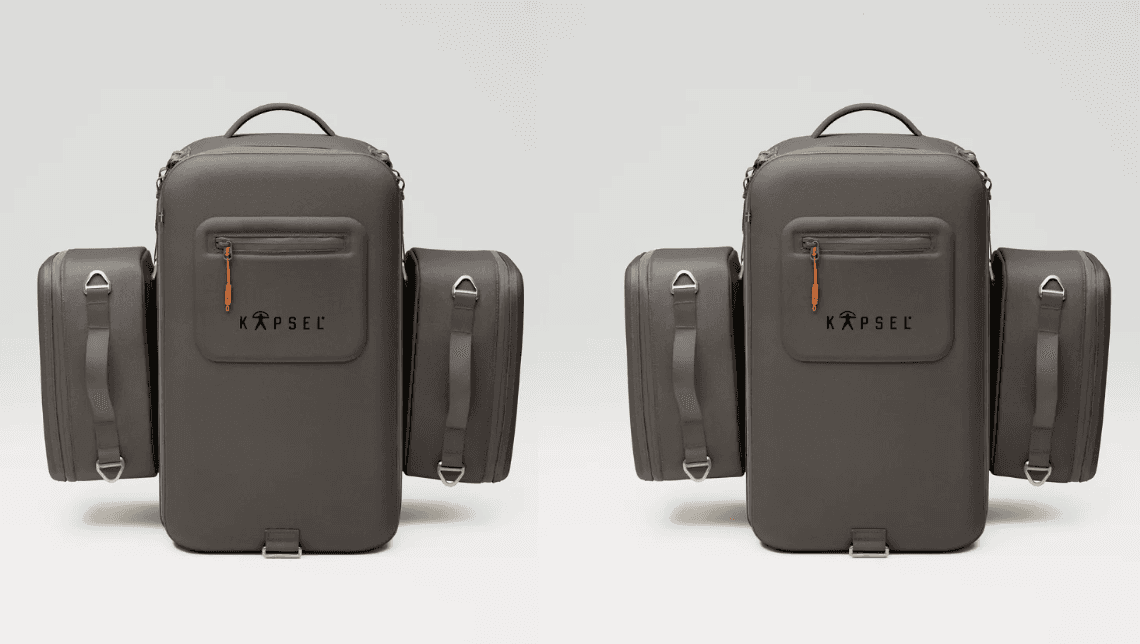
“One bag. Three capsules. Everything selected, tested and organised by function. Assembled in Borås, Sweden.”
Q&A
Q: Kapsel starts from an observation, that most people know they should be better prepared, yet very few act. Why do you think that gap has persisted for so long?
In Sweden at least, 68% of Swedes have thought about their preparedness. 61% haven't done anything about it. The awareness is there, largely because Sweden's civil contingency authorities have been pushing the message. But awareness without an accessible and relatable product to act on doesn't lead anywhere.
For a long time, the alternative has been to figure it out yourself. You read the list of things you should have at home and it gets overwhelming. You start comparing radios, water filters and first aid kits across different websites. Or you just don't do anything at all. And whatever people did buy often ended up in a box in the attic, looking more like military surplus than something you'd keep in your home.
Few people get around to prioritising it when it is something you hope not to use. It is not that they do not care. It is rather that the effort of going from “I should do something” to actually doing all things that are asked of me has been too high.
Q: A lot of products in this category lean heavily on fear, worst-case scenarios, or tactical aesthetics. You have taken a noticeably calmer and more system-oriented approach. Why was that important to you?
Because fear or tactical aesthetics only speaks to a niche audience. It might generate clicks and short term sales but it will not appeal to most people.
If you want preparedness to be normal, it has to feel normal. It has to look like something you would keep in your home, not something you hide in the basement. The moment you wrap it in camouflage or sell it as individual components, you have lost the majority of the people who actually need it. And whatever they do piece together usually ends up in a bag in the attic. We designed Kapsel to be kept visible. Not stored away. Not forgotten. Because the equipment that ends up in the back of a closet is the equipment that never gets used.
We looked at how other categories solved similar problems. Fire blankets were made to look like coffee table books, something people wanted in their kitchen, not hidden in the cupboards. Hövding understood this. They didn't make a better helmet. They made one that worked with how people actually lived, and that changed the behaviour. People who never wore a helmet suddenly did. That shift, from obligation to something you choose, is what we are trying to do for preparedness.
Q: You have said the problem was not lack of awareness, but the lack of something coherent to actually buy. What did you find broken in the existing preparedness market, and how did that shape the way you built Kapsel?
The market was fragmented. You could buy individual components from dozens of different stores. But nobody had put it together into a system that actually functions as a whole. Where every component is expertly verified and chosen for a reason.
And beyond the products themselves, nobody had thought about what happens when you actually need to use them. Do you know what you have and how to use it? Can you carry it if you need to leave? Does it scale if your household grows?
We started from the other end. What does it look like at three in the morning, no power, your family behind you, and you need to find the right thing in the right order? Everything in Kapsel follows that logic. The organisation, the labelling, the printed instructions, the choice of materials. All of it.
Q: Kapsel is not positioned as a random emergency kit, but as a structured preparedness system. What does that distinction mean in practice, and why does it matter when stress is high and time is short?
An emergency kit is a collection of things. A system is built around how those things are used.
In practice, it means every component has a fixed place. Every capsule and its components are organised by function with light reflective labels for water and health, energy and light, personal and shelter. The personal and shelter capsule scales with your household. One per person. Because a family of four has different needs than someone living alone, and your preparation should reflect that. Our instruction book is written for stress and durability, made to bring with you, dedicated spaces for you to add your most crucial addresses, contact information and meeting points with your near and dear.
When you are under pressure, you do not think clearly. You do not remember where you put things. You do not read long instructions. Structure is what carries you through that. Packing your own bag, knowing exactly where to reach, what to open first, and what to do next. That is valuable time better spent improving your situation or calming your family.
Q: Launching a new category of consumer facing product always involves some element of education. How do you think about building trust and changing behaviour in a market where the need is real, but action is often postponed?
Much of the conviction has already been done by the Swedish government and the European Union. The Swedish civil contingency authority sent their brochure to 5.2 million households. The Prime Minister said we are not at peace. Riksbanken told people to keep cash at home. The EU’s Preparedness Union Strategy urged all European citizens to maintain essential supplies for at least 72 hours. The awareness is there.
Our job is to make the step from awareness to action as short as possible. One purchase. One bag. Done. Your physical insurance. We want to remove every reason to put it off.
Trust comes from being honest about what this is and what it is not. We do not promise survival in extreme scenarios. We promise that your household can manage a week without a functioning society. That is what the Swedish authorities recommend, and that is what Kapsel delivers.
Q: Preparedness has historically sat somewhere between public responsibility and private initiative. How do you think about Kapsel’s role in that tension, especially in a country like Sweden with a strong culture of civil preparedness?
The state builds the infrastructure. It funds municipal preparedness, strengthens civil defence, sends out guidance. But it does not pack your bag for you. It gives you guidelines for how you should manage seven days but there is a clear line where public responsibility ends and private action needs to begin.
The state tells you to be prepared. But it does not tell you how to get there. That is where Kapsel comes in. We take the recommendation and turn it into a product you can actually bring home.