The Founder Who Refused the Free Beta
Aug 15, 2025
3 min read
Author
Intro By Maxime Pasquier, Investor @ Blackwood
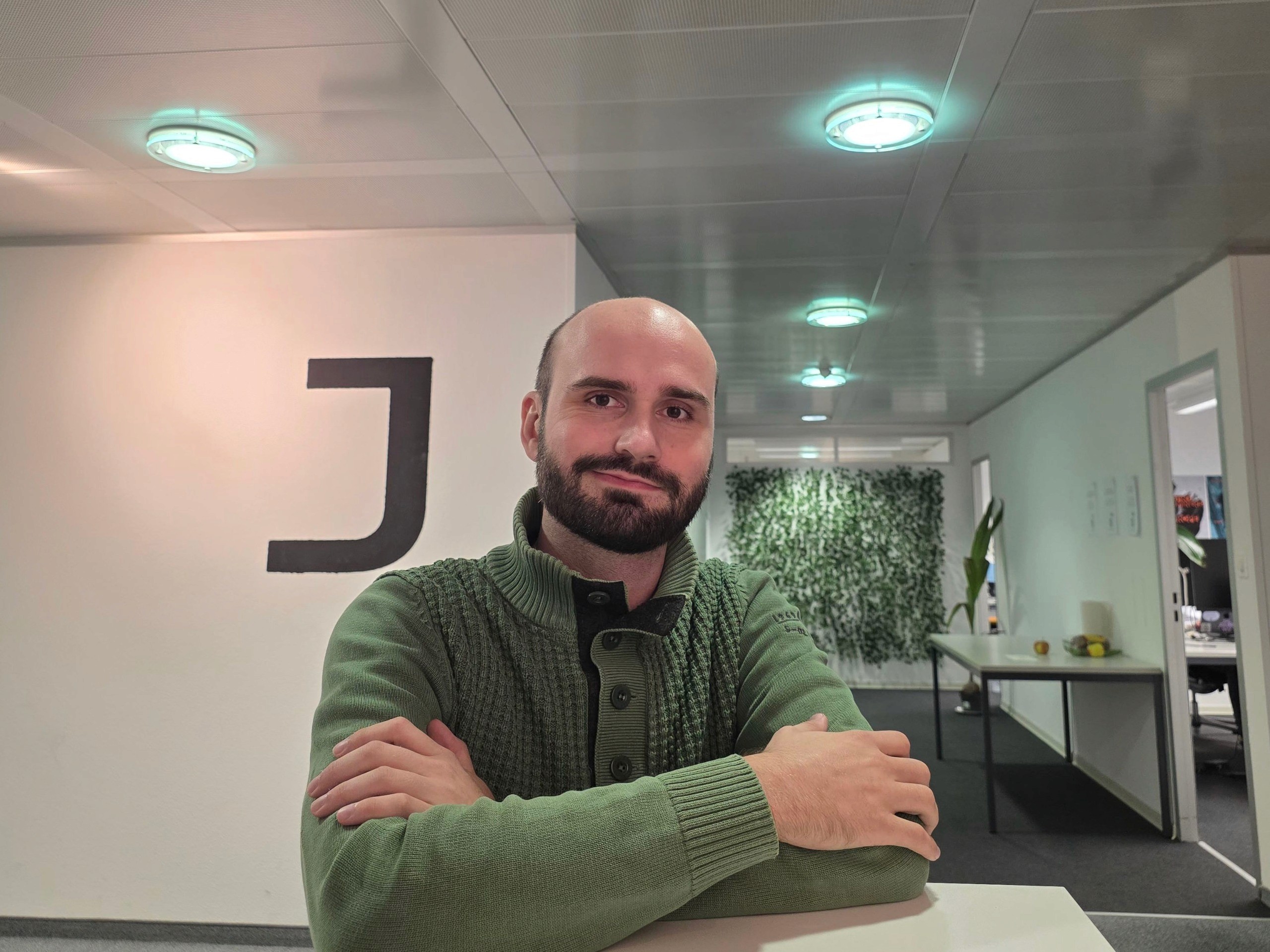
We first met Simon a while back, in the early days of Evertrace. Even then, there was something disarming about him, humble, curious, quietly obsessive about building something that mattered.
Over time we became closer, and at Blackwood we ended up adopting Evertrace ourselves. It wasn’t just the product that won us over; it was Simon’s way of working: relentlessly refining, listening without ego, and spotting patterns others missed. He’s the kind of builder whose presence recalibrates the room, measured in tone, precise in thought, and impossible to ignore when he chooses to speak.
We sat down to talk about what happens when you combine an investor’s eye with a founder’s urgency, the strange signals that shape big decisions, and the parts of yourself that survive every pivot.
Q&A - Simon Bøttkjær - Evertrace
What’s a lesson you picked up from your previous role in venture’s best founders that you’ve consciously not applied to your own company?
Two things: perfecting the product before launch, and believing you can hire your way out of problems. I saw founders delay release for months chasing polish, and scale teams too fast thinking headcount equals progress. At Evertrace, we stay small and focused, build MVPs, and ship early. It’s better to get something in front of users fast than to burn time and money trying to be perfect on day one.
Evertrace is all about spotting the important before it’s obvious. What’s one time you completely missed the obvious in your own life?
We once ignored a feature request because it felt trivial - a single data point and a simple field mapping that didn’t seem like a big deal. When we finally built it, adoption, user satisfaction, and sales all increased because it unlocked a workflow we hadn’t realised was so important. It taught me that “small” requests are sometimes the most leveraged.
What’s the smallest, strangest “signal” you’ve ever picked up that changed the course of a decision?
Early on, customers kept asking for extra features - many of which our competitors already had - so we assumed we needed to close the gap. But many of them still chose us, even though we were only a couple of weeks old. Over time, we realised it was because our coverage and signalling were the real reason. That was the aha moment for me: people were buying us for one thing we did really well. It made us stop worrying about matching every feature and start focusing on protecting and improving that core strength, and the core value we promise our customers.
Which felt riskier: writing your first investment cheque, or telling your team to ship something you weren’t sure was ready?
For us, shipping early doesn’t feel risky - our team is so lean that everyone owns what they ship, and we default to shipping early and often. So for me, it has to be my first investment cheque.
What’s the decision in your career that looked reckless to everyone else, but felt inevitable to you?
From day one, we had a policy that we weren’t going to give our product away for free. The best way to know if you’ve built something valuable is if customers are willing to pay for it. We didn’t want fake validation from users - we wanted proof. We skipped the whole “free beta user” and “design partner” playbook.
If all your ventures vanished tomorrow, what part of you would still be exactly the same?
I’d still be hunting for patterns in messy problems until I see a clear path forward. That instinct doesn’t go away - it just looks for a new domain!
You’ve worked with data, AI, and startups for years. What’s one belief you have about people that no dataset could ever convince you to change?
People overestimate the value of planning and underestimate the value of doing.
If you couldn’t work in tech or investing for the next five years, what would you do, and what would scare you most about it?
I’d work in politics - most likely in strategy or policy. It’s always been a big interest of mine, and still is. The scary part would be how slow change happens. In startups, you can make a decision in the morning and see the impact by evening; in politics, it can take years to see if your ideas actually work.
Imagine Evertrace succeeds beyond your wildest projections. What’s the first thing you’d do that has nothing to do with business?
Take time completely offline to reset - go to French Polynesia with my girlfriend, which has been on my bucket list for years - and then slowly start thinking about what I should build next, while drinking cold beers at the beach ;)
Whether you’re hunting the next breakout startup or just curious what’s quietly reshaping the market, Evertrace is worth a look, you can try it for yourself at Evertrace.ai and/or reach out to Simon at sb@Evertrace.ai