Qualia: The Missing OS for Embodied AI
Mar 6, 2026
4 min read
Author
Rasmus Holt

I first met Fabian at a VC breakfast we hosted at our old office years ago, back when Qualia had not yet launched. Even then, he had the calm intensity of a founder with real conviction.
Now what was still mostly conviction has become concrete.
Qualia is now out in the open, building model infrastructure for robotics at a moment when embodied AI is starting to look less like a techno-optimist utopia and more like the next real platform shift.
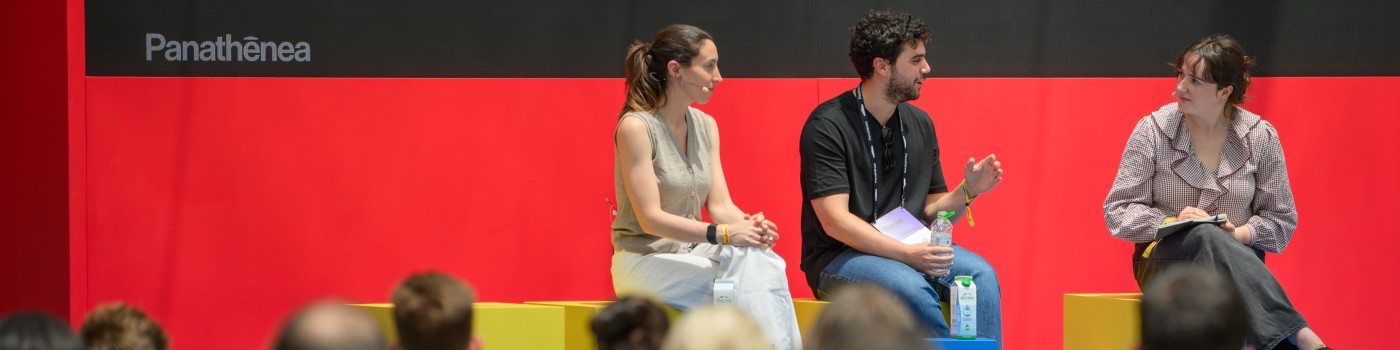
The early signal around the company already says a lot. Their recent launch drew an unusually strong crowd (Atomico flew in), some were even quoted as getting a bit emotional about the possibilities Qualia points to (S/O Max & Wave). That’s rare these days.
That kind of room does not happen by accident. It suggests that Qualia is tapping into something real.
We sat down with Fabian to talk about what these foundation models have changed in robotics, why infrastructure may be the most important layer in embodied AI, and what it takes to build for a world where intelligence no longer lives only on the screen, but moves through physical space.

Q&A
Q: What is Qualia?
A: Qualia is the development platform for robotic foundation models. If you want to take a foundation model; a VLA, a reward model or a world model — and make it actually work for your specific robot, your specific task, your specific environment, that's what we build. Fine-tuning, evaluation, reward loops, deployment. One platform. We think of ourselves as what databricks and langchain did for NLP, but for physical intelligence.
Q: For people outside the field, what is the real difference between a robotics stack before foundation models and one after them?
A: Before foundation models, you hand-coded every behavior. You wrote a perception pipeline, a planning algorithm, a control loop, all separate systems, all brittle, all specific to one task. If the lighting changed or you moved an object two centimeters, it broke. Every new task was basically starting over.
After foundation models, the robot has a more general understanding of the physical world and the task at-hand baked in. It's seen thousands of examples of objects, actions, spatial relationships. You're no longer programming behaviors here really you're adapting a model that already has a foundation of how to perform actions. The gap you're closing is much smaller, which means you can go from a new task to working prototype in hours instead of months.
Q: A lot of people talk about VLAs as the breakthrough interface for robotics.
What do they genuinely unlock, and where do you think the market is still overstating their current capabilities?
A: What they genuinely unlock is the ability to specify robot behavior through demonstration rather than code. Show a robot what you want, have a robot show itself, fine-tune an action model like a VLA or VAM on that data, and it generalizes to variations of that task. That's transformative: it collapses the skill-creation bottleneck that's held back robotics for decades. Tasks previously completely out of the question for robotics can now be explored.
Where the market overstates things: generalization is one. Today's models are not "one model, any task, any robot." They're powerful within a trained distribution, but they still need task-specific fine-tuning, they still fail on edge cases that look trivial to a human, and inference latency is a real constraint. We've measured 10x+ slower in cloud inference versus locally. The vision of a complete general-purpose robot brain is real, but it's not today. Right now, the value is in narrow adaptation done fast, taking a foundation model and making it excellent at your specific job. That's where the unlock is, and that's what we build for. That being said, with the right infrastructure and reward modeling process post deployment these robots can learn from their own mistakes and improve during deployment, we are helping with that in Qualia too.
Q: In language models, scale created emergent behavior. Do you think robotics will follow the same pattern, or will progress depend less on model scale and more on data quality, environments, and feedback loops?
A: Both, but the bottleneck is different. In language, you could scrape the internet and get trillions of tokens. In robotics, there is no internet of physical experience. Every data point requires a real robot moving in a real environment, or a simulator good enough to transfer. So scale matters, but the hard problem is getting scale, not just applying it.
That's why I think progress in robotics will disproportionately reward teams that solve the data and feedback loop problem. High-quality demonstrations, reward models that can auto-evaluate rollouts, synthetic environments that generate meaningful training signals. You can always throw more compute at a bigger model. You can't easily conjure the data to train it on.
This is a big part of why we built our reward model pipeline that learns to score robot behavior at inference. Once you can automatically evaluate whether a rollout is good or bad, you close the feedback loop. That's what turns a fine-tuned model into a model that actually improves.
There are however interesting emergent behaviours in this space and I could go into a lot of them, but one punchy example is that you can train on pose estimations of humans doing things, and align it with robot data, and actually see model performance. That is, the models for robots actually improve with human video demonstration data as well - which feels intuitive but is crazy if you think about it.
Q: One of the hardest things in robotics has always been the jump from demo to deployment. How much of that problem is actually a model problem, and how much is an infrastructure and systems problem?
A: It's 80% infrastructure, 20% model. We spent weeks trying to get open-source VLAs into production. Pi0.5 with dependencies that break across CUDA versions, action spaces aren't standardized between model families.
The models are getting good enough. What's missing is the entire iteration loop around them. Training an action model like these once is not the hard part. The hard part is the cycle, you train, you evaluate, you look at where it fails, you adjust hyperparameters or add data, you retrain, and you do that dozens of times before you have something deployable. Today that loop is almost entirely manual. Someone watches rollout videos, eyeballs whether the gripper closed at the right moment, tweaks a config, and kicks off another eight-hour job. That doesn't scale.
This is where agentic tooling changes the game. We're building toward a loop where an AI agent can manage the iteration process itself, launch a training run, use a reward model to automatically score the outputs, identify failure modes, adjust the training configuration, and relaunch. Not as a black box, but as an intelligent assistant that proposes and launches the next experiment and explains why. The human stays in the loop on the decisions that matter, but the busywork of running and evaluating dozens of training variations happens autonomously. We are doing this today.
The teams that will deploy robots at scale aren't going to be the ones that just invent the best model in my opinion. They're going to be the ones that can iterate the fastest and smartest, from data to trained model to evaluation to the next training run, with as much of that cycle automated and intelligent as possible. That's a tooling and infrastructure problem, and that's what Qualia helps solve.
Q: If foundation models become the cognitive layer for robots, where do you think the most defensible companies get built?
A: Three layers, in my view.
First, the model layer, but this is going to commoditize fast. We're already seeing it. Being the best model is a temporary advantage at best, in a model landscape dynamic very different from the LLM world where scale is everything.
Second, the application layer, vertical companies that own a specific domain. The warehouse automation company, the surgical robotics company. They'll have defensibility through domain expertise, data moats, and customer relationships. But they're narrow by design.
Third, and this is where I'd place the biggest bet (where I am very biased); the platform layer. The infrastructure that lets all those vertical companies actually use foundation models. Tuning, reward modeling, evaluation, deployment. This is where compounding effects kick in: every customer's data makes the platform better, every integration adds lock-in, every model that ships builds trust. It's the picks-and-shovels play, except the picks and shovels are genuinely very hard to build, and its for a space that doesn't yet fully exist, the world is waking up to this as we speak. That's what Qualia is. We're not building robots. We're building the platform that makes every robot builder faster.